Phone:
+8618098949445
Physical address:
604, Building 1, Sanyu Industrial Park, Xinwei Fourth Industrial Zone, Xinzhuang Community, Majan Street, Guangming District, Shenzhen

Phone:
+8618098949445
Physical address:
604, Building 1, Sanyu Industrial Park, Xinwei Fourth Industrial Zone, Xinzhuang Community, Majan Street, Guangming District, Shenzhen

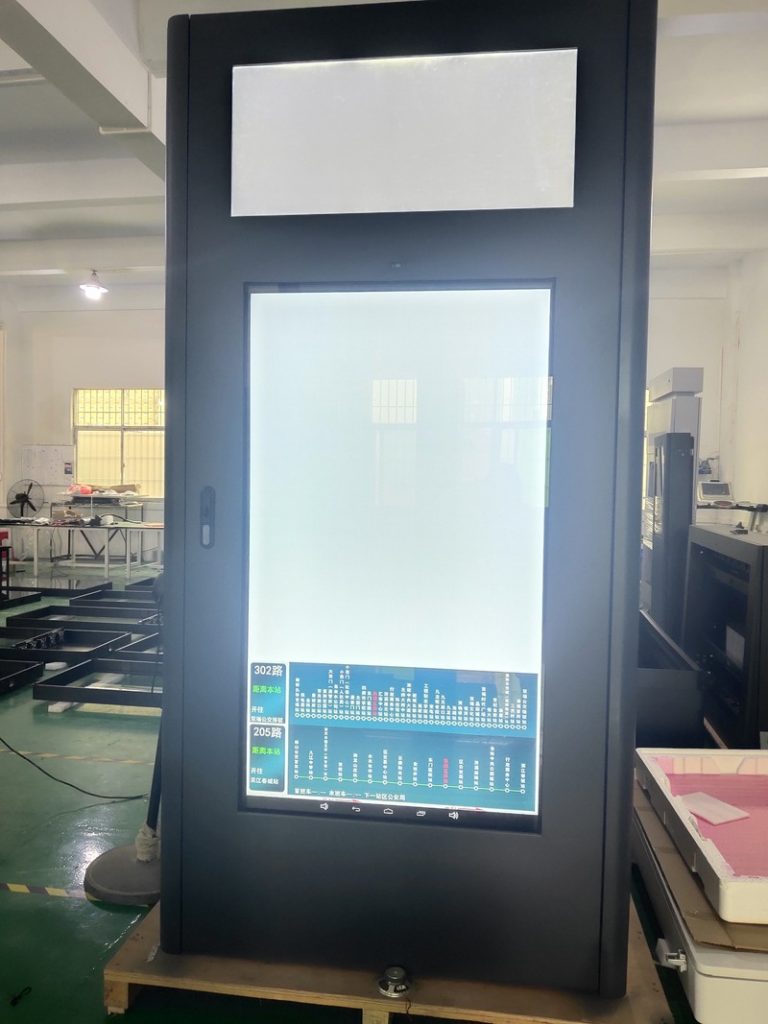
A bus stop must communicate several kinds of information within a limited viewing area. Passengers may need a quick visual announcement while approaching the shelter, then more detailed route or service information once they are waiting. For a project in Japan, ZXT LCD completed ten standing outdoor display units that combine a 32-inch landscape screen above a 55-inch portrait screen. The full batch has been inspected and shipped.
This bus stop digital signage configuration divides the enclosure into two purposeful content areas. The smaller upper screen provides a wide horizontal format, while the larger lower screen provides a vertical canvas for more detailed information. The two screens are physically integrated into one cabinet, but their content relationship depends on the media system selected by the customer.
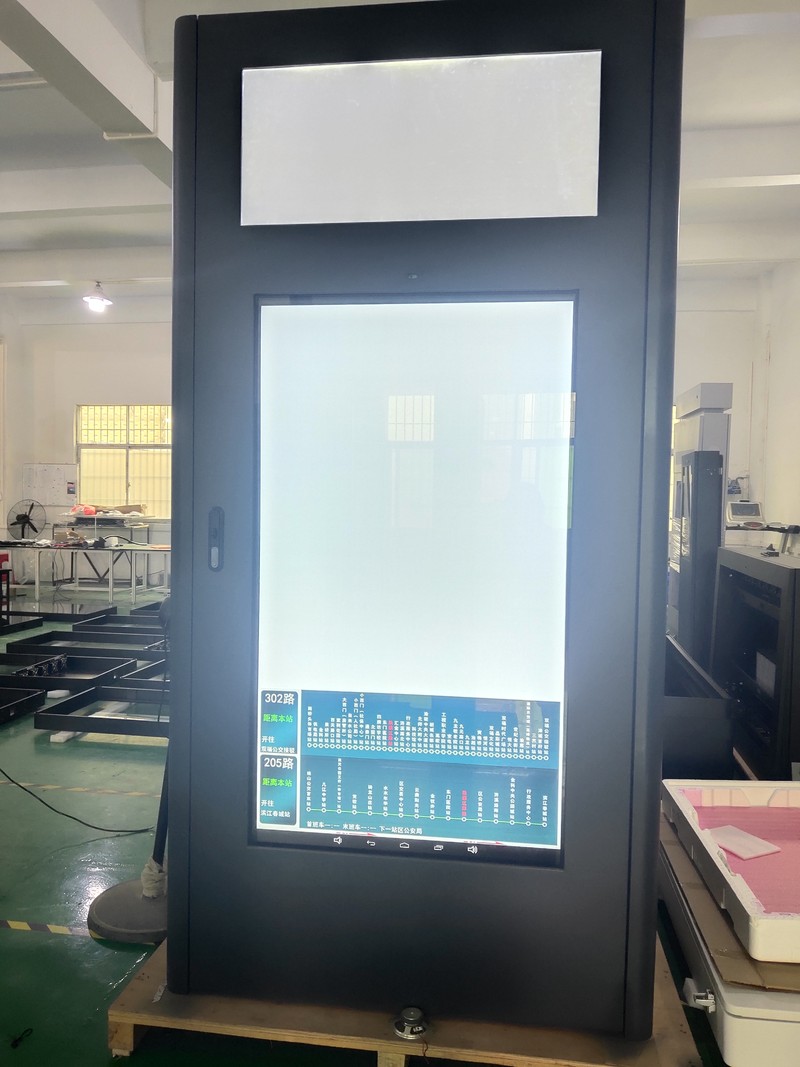
The upper 32-inch landscape display is positioned where short videos, campaign visuals, warnings or concise status messages can attract attention quickly. Its wide format suits content designed to be understood at a glance as passengers approach the stop.
The lower 55-inch portrait display offers more vertical space for route diagrams, timetable-style layouts, stop information, public notices or advertising. Content designers can use the larger area to establish a clear reading order, placing the most important information where it remains comfortable to view from the waiting area.
The screens may present connected information or operate as separate publishing zones. If synchronized playback is required, the player configuration, resolutions and scheduling logic should be tested before deployment. The hardware structure alone does not guarantee synchronized content.
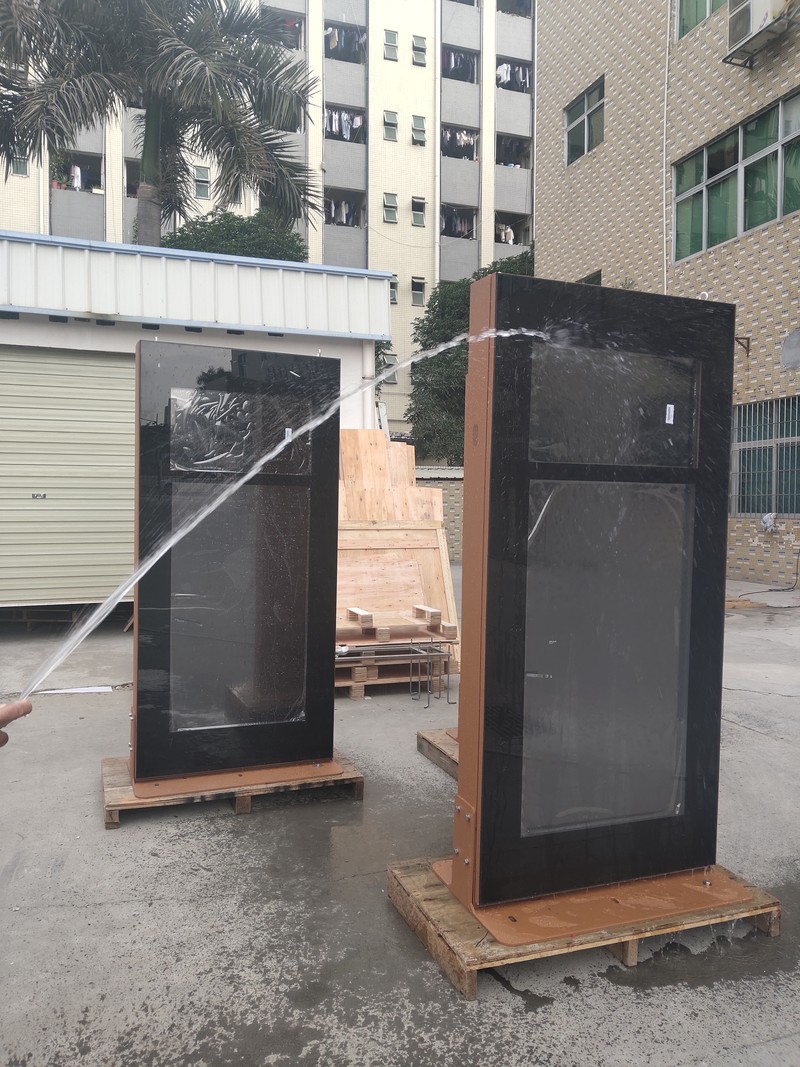
Unlike people walking past a retail display, bus passengers may remain in one location for several minutes. This creates an opportunity to combine immediate service communication with longer-form local information, but it also requires careful prioritization.
Transport notices should remain easy to distinguish from commercial content. Text size, contrast and layout need to match the real viewing distance, and frequently changing information should be managed through a publishing process that the transport operator can maintain reliably.
The final screen configuration should also be assessed against the Japanese site’s daylight, reflections and operating hours. No unconfirmed brightness or automatic-light-control specification is assigned in this article.
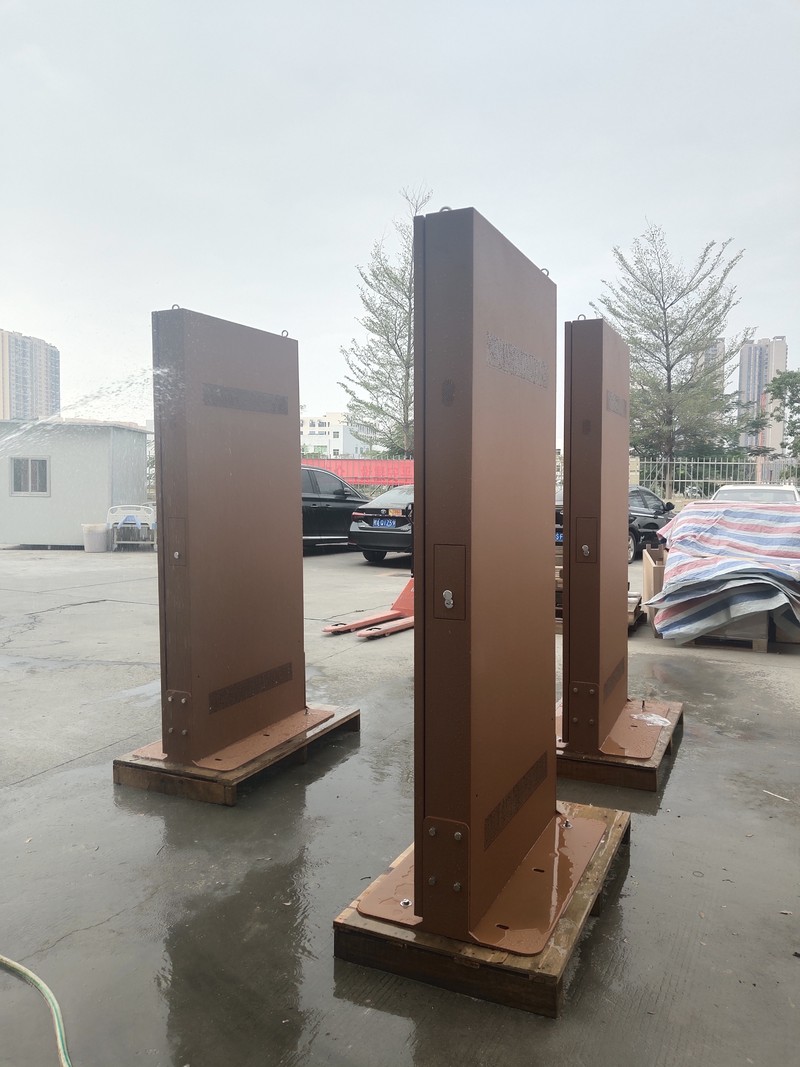
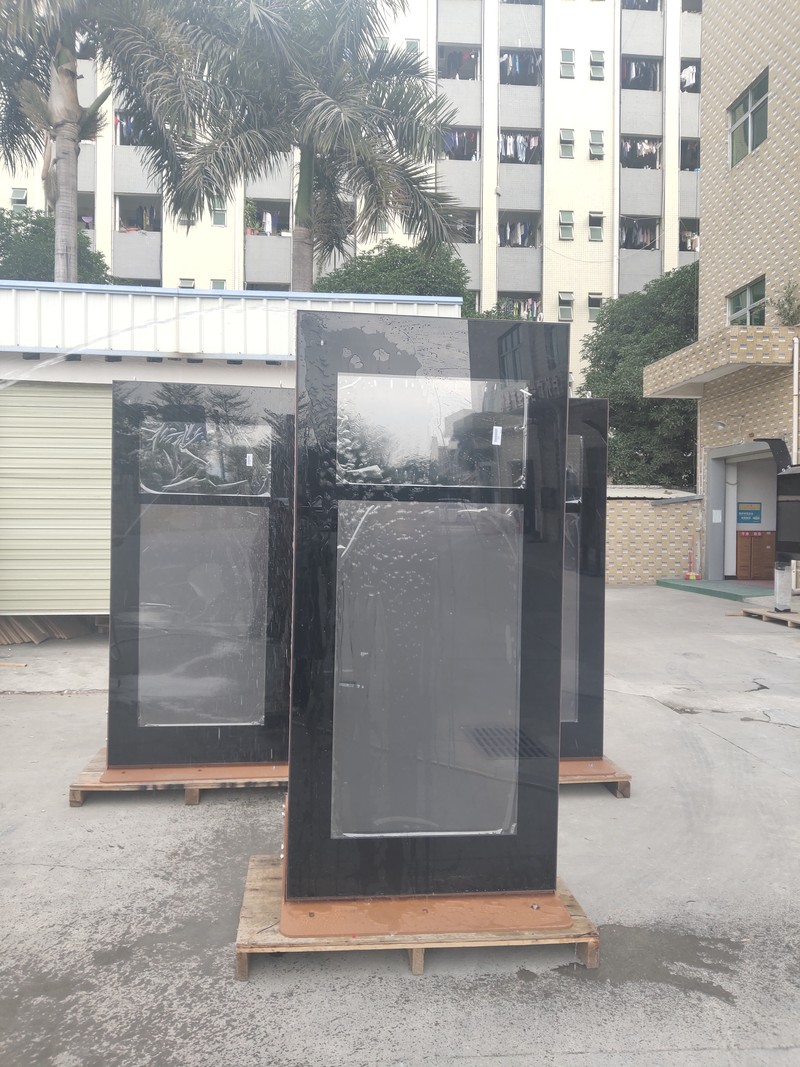
Integrating the two screens into one vertical enclosure creates a single physical information point instead of installing two unrelated cabinets. Screen openings, internal supports, cable paths and maintenance access can be coordinated during manufacturing.
The self-contained standing enclosure does not rely on an existing wall, allowing the site team to plan its position before permanent installation. It should not be treated as freely movable. The foundation, anchors and structural requirements must match the ground conditions, wind assessment and local safety rules.
Power and network routes should be planned with the bus-stop infrastructure. Maintenance staff need safe access without obstructing the boarding area, accessible path or the driver’s view of waiting passengers.
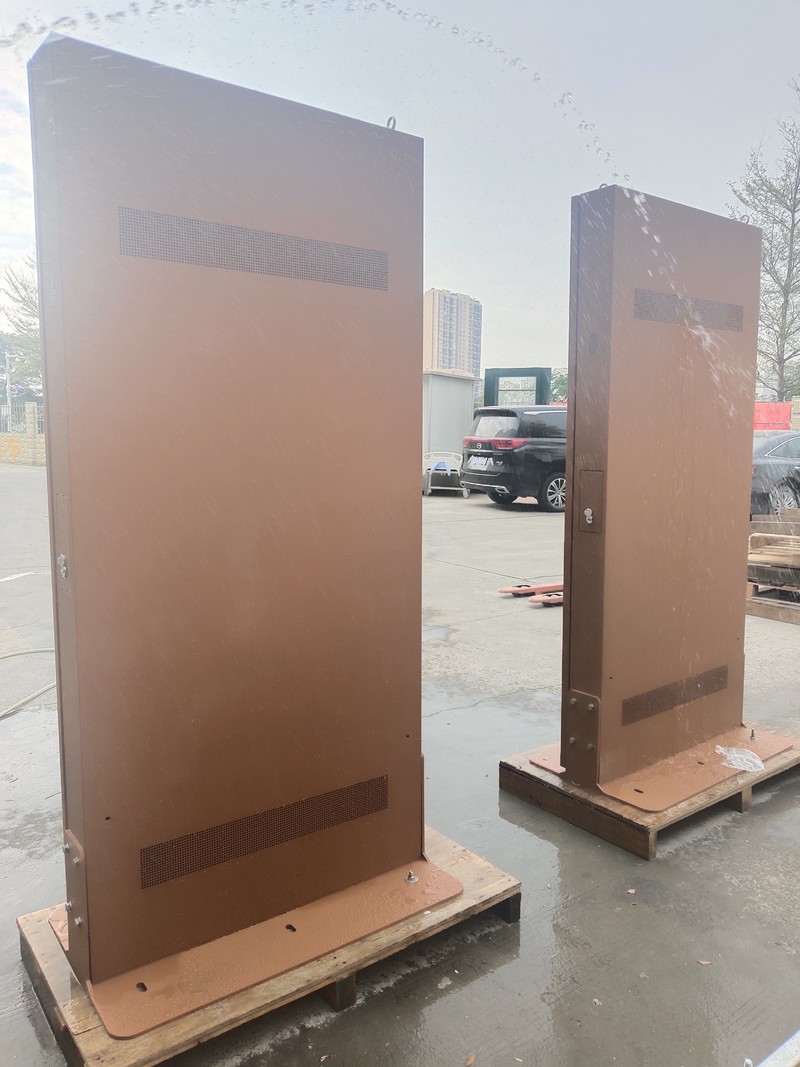
A ten-unit order may be distributed across several stops, making dimensional and visual consistency important. Differences in screen alignment, cabinet finish, service access or base position can complicate site preparation and future maintenance.
ZXT LCD followed the confirmed configuration across the batch and checked the operation of both screens, enclosure assembly, visible surfaces and the agreed accessories. The article does not add an unconfirmed operating system, touch function, protection rating or cooling method.
Suitable export packing was prepared to protect the screen areas and tall enclosures during international transport. All ten units have been shipped to Japan after inspection.
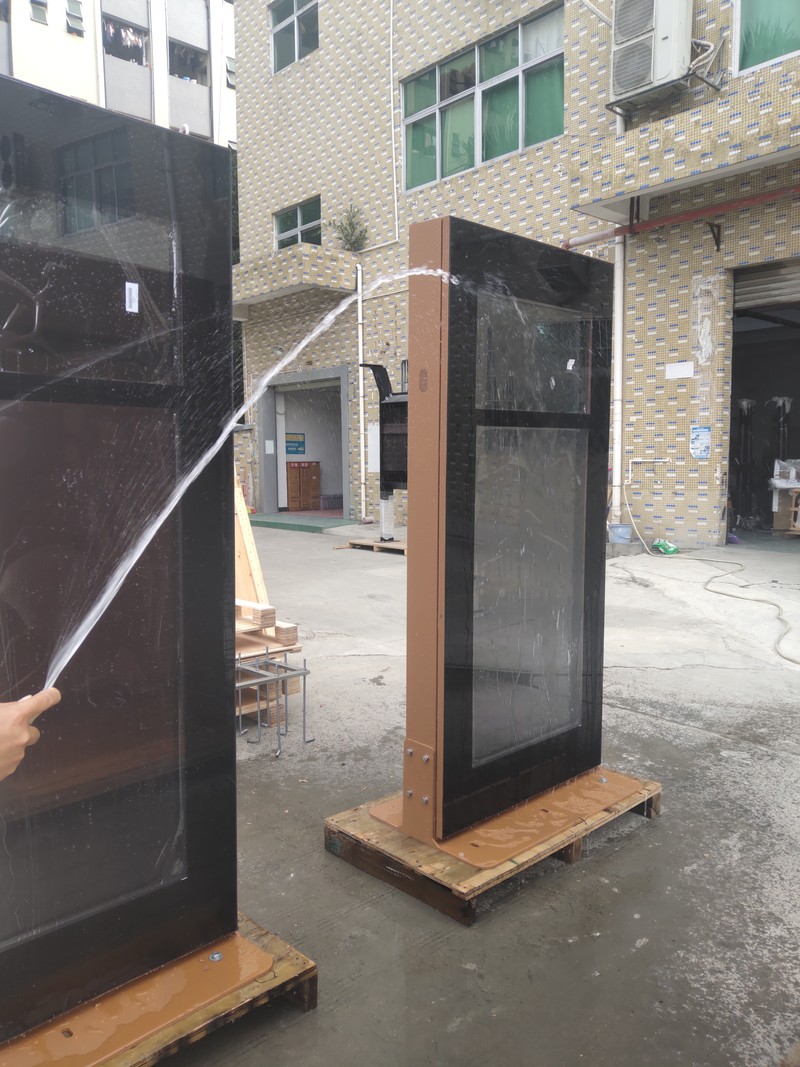
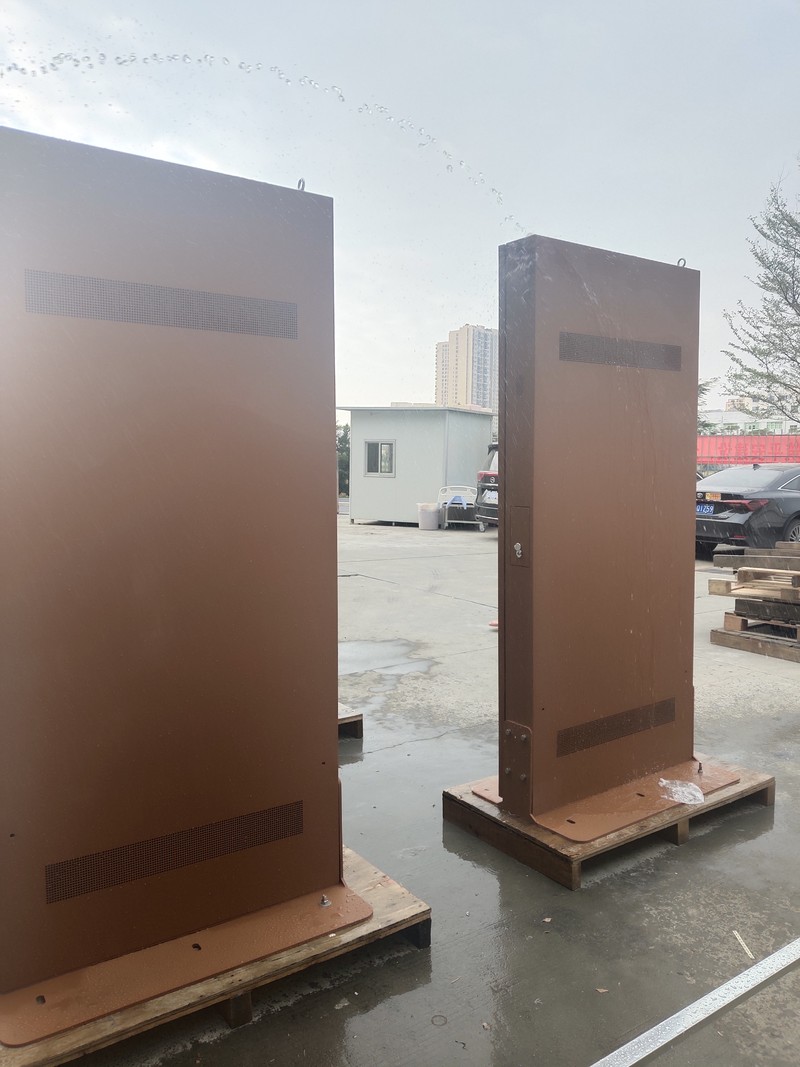
Shipment confirms that manufacturing, factory checks and dispatch have been completed. It does not prove that the ten displays have already been installed, connected to a passenger-information platform or placed into public operation.
Before installation, the project team should confirm the foundation, power, network, drainage, viewing direction, sunlight exposure, maintenance clearance and responsibility for publishing transport information. Any integration with live arrival data requires compatible software and data access that must be handled separately.
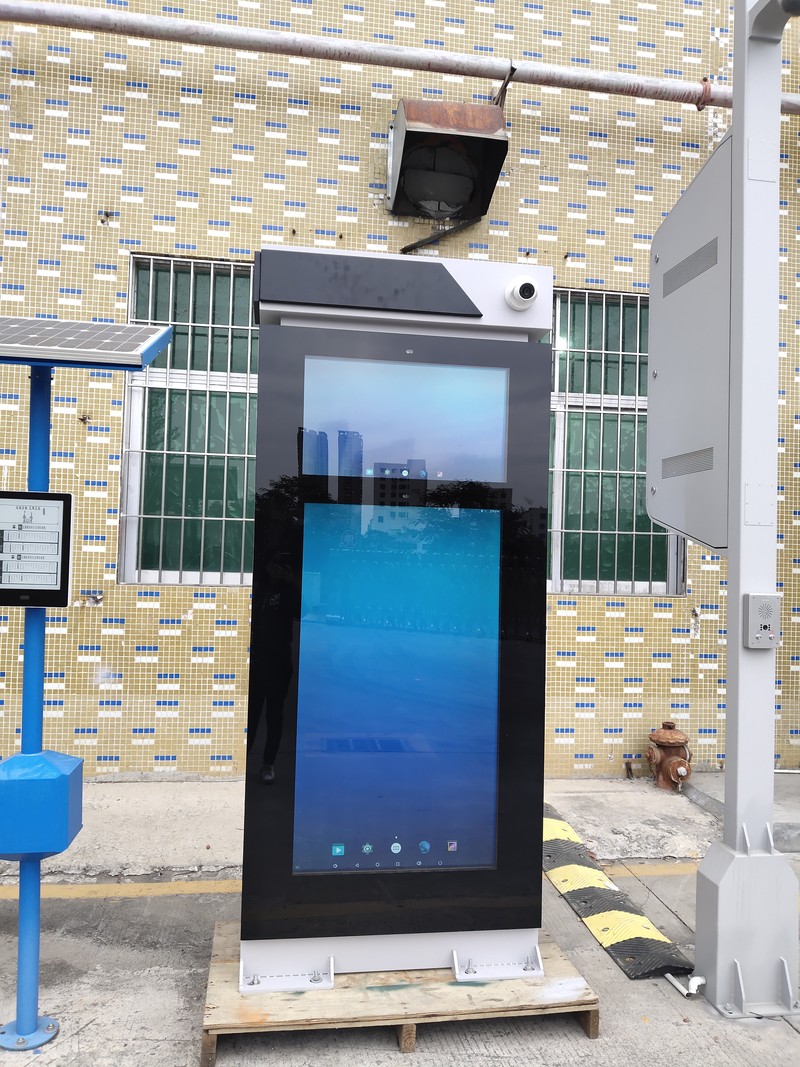
ZXT LCD supports international outdoor display projects through enclosure production, component integration, functional inspection and export packing. This Japanese project demonstrates how bus stop digital signage can divide fast visual communication and detailed passenger information between two screen formats within one standing structure.
Explore more outdoor LCD display solutions from ZXT LCD.
If you would like to get the specification about above product, please contact our sales team for detailed specifications and a project quote.