Phone:
+8618098949445
Physical address:
604, Building 1, Sanyu Industrial Park, Xinwei Fourth Industrial Zone, Xinzhuang Community, Majan Street, Guangming District, Shenzhen

Phone:
+8618098949445
Physical address:
604, Building 1, Sanyu Industrial Park, Xinwei Fourth Industrial Zone, Xinzhuang Community, Majan Street, Guangming District, Shenzhen

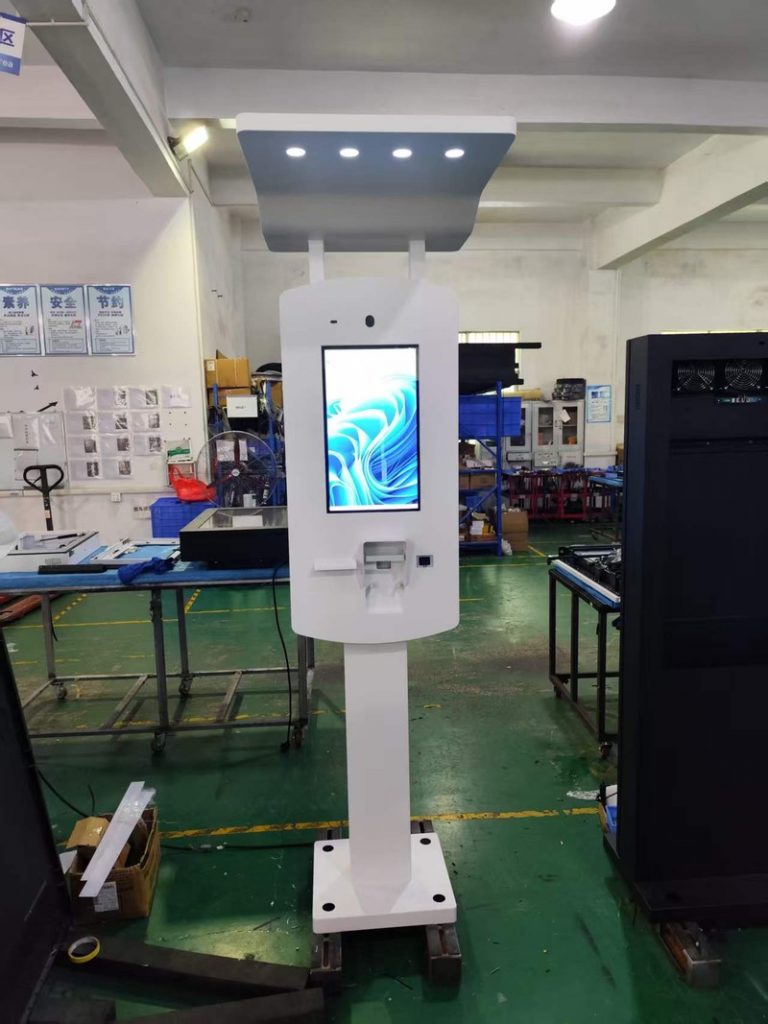
For outdoor digital signage operators, few events cause greater anxiety than a sudden downpour. When unsealed screens suffer water ingress, consequences range from screen glitching and blackouts to short-circuited motherboards and complete equipment write-offs. Unprotected displays deployed outdoors create constant apprehension, requiring staff to haul units indoors at the first sign of rain.
Waterproof outdoor digital signage kiosks were engineered specifically to eliminate this operational vulnerability. Below is an examination of their core operational advantages, followed by essential selection guidelines.
This represents the most immediate operational benefit. Certified outdoor kiosks feature precision enclosure gaskets, sealed interface ports, and optically bonded display panels that completely block rainwater infiltration. Operators avoid dispatching staff to haul equipment inside during weather shifts, ensuring marketing broadcasts continue uninterrupted through sudden storms.
For permanent commercial placements—such as store entrances, pedestrian plazas, and parking structures—weatherproofing eliminates continuous manual monitoring overhead.
Weatherproof engineering naturally incorporates dust-tight protection. Windborne dust, sand, and plant fluff infiltrate unsealed enclosures, coating cooling fans, mainboards, and interface ports—impeding heat dissipation and inducing electrical contact drift that triggers random reboots and lockups.
Certified IP65 ingress protection denotes total dust-tight sealing alongside water-jet resistance. Keeping internal enclosures clean prolongs component durability and drastically reduces maintenance cleaning cycles.
Beyond torrential storms, chronic ambient humidity presents an insidious hazard. Morning dew, sustained rainy-season dampness, and diurnal condensation cause contact pin oxidation, circuit board corrosion, and optical glass fogging over time.
Proper weatherproofing—paired with internal climate control and drainage architecture—significantly mitigates humidity damage, safeguarding delicate electronics against chronic moisture degradation.
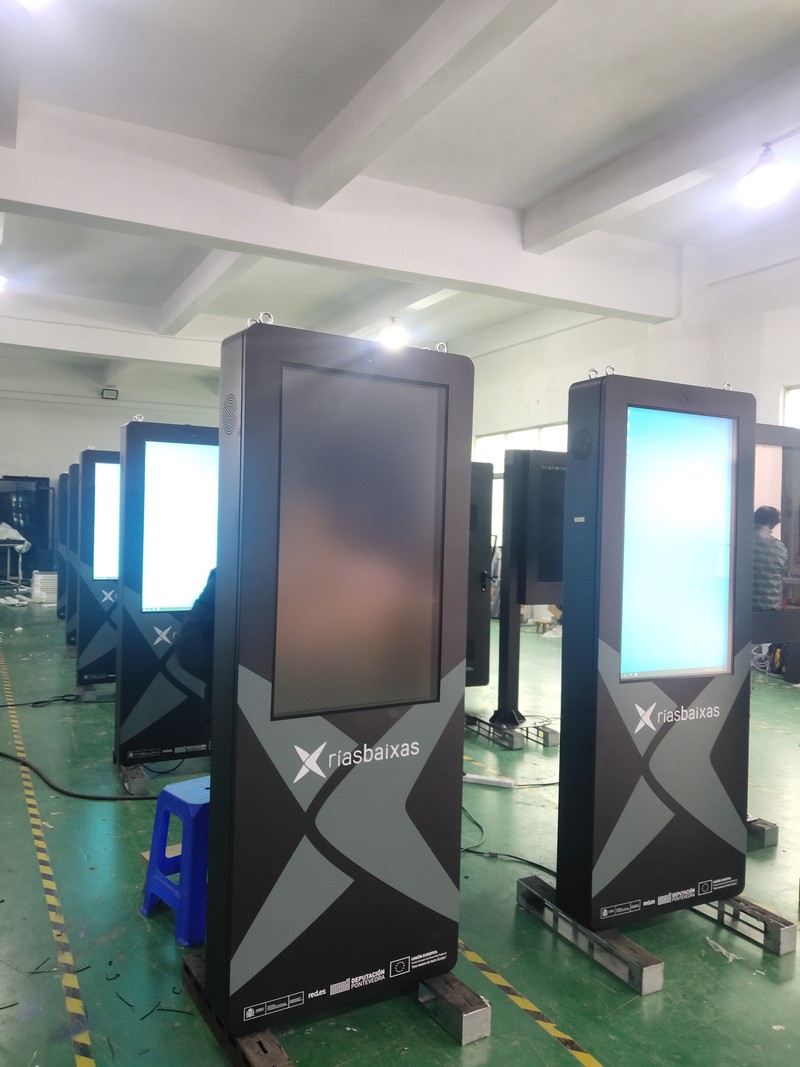
Robust weatherproofing and dust sealing yield lower failure rates and extended operational lifespans. Servicing outdoor displays requires field technician dispatches and specialized access equipment, incurring heavy expenses. Investing in verified weatherproofing delivers substantial savings through fewer repairs, minimal downtime, and extended replacement cycles.
Consequently, when evaluating purchase quotes, consider comprehensive lifecycle costs rather than initial purchase price alone; waterproof commercial hardware delivers superior long-term economics.
With certified weatherproofing, spatial deployment options expand dramatically: storefront entrances, open plazas, parking lanes, street sidewalks, scenic parks, transit stops, and outdoor festival forecourts.
Form factors adapt to spatial needs: freestanding pedestals for open thoroughfares, wall-mounted kiosks for building facades, touchscreens for self-service wayfinding, and battery-powered or solar-assisted mobile units for temporary off-grid events.
A digital screen plagued by water fogging, flickering artifacts, or recurring blackouts severely damages brand prestige. Weatherproof outdoor kiosks deliver continuous visual stability and pristine clarity, ensuring digital signage reinforces brand professionalism rather than becoming an embarrassing public eyesore.
Recognizing operational advantages requires understanding technical boundaries:
Understanding IP Ratings: IP65 denotes total dust tightness and resistance against low-pressure water-jet spray from any angle, handling driving rain easily. However, it does not permit water submersion; localized ground flooding must be mitigated via elevated plinth mounting.
Integrated System Weatherproofing: Water ingress occurs most frequently through cable entries, cooling louvers, and rear door seams rather than the glass face. Verify that cable glands feature watertight seals with downward drip loops and that cooling vents are baffled against rain.
Correct Structural Installation: Superior hardware can fail if physical installation is flawed. Encase cabling in conduits, position interface ports downward, elevate bases on concrete plinths, and ensure grounding complies with electrical codes.
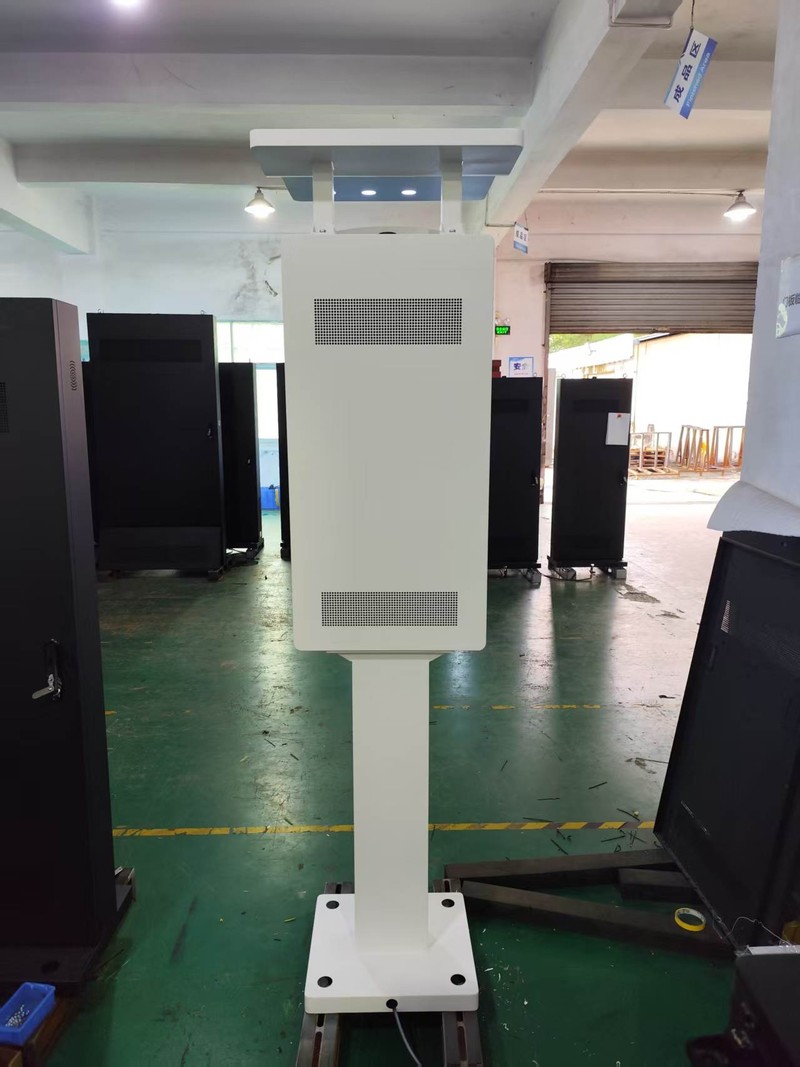
Balancing Weatherproofing with Thermal Cooling: Sealing an enclosure tightly traps internal heat. Verify that thermal cooling architectures match local summer climates, ensuring high-brightness panels do not overheat.
Contingency Protocols for Extreme Weather: Typhoons, flash floods, and severe blizzards require specialized structural anchoring or temporary sheltering; weatherproofing does not replace disaster risk management.
Supermarket & Retail Entrances: Weatherproof displays maintain agile promotional marketing right at store entrances regardless of rain. Parking Garages & Portals: Damp, dusty environments require continuous guidance. Public Transit Shelters: High-traffic nodes require continuous timetable updates under rain or shine. Tourist Attractions & Municipal Parks: Open landscapes demand all-weather wayfinding. Outdoor Marketing Roadshows: Mobile battery units provide hassle-free promotional agility across shifting venues.
Will an IP65 outdoor display leak during heavy rain? An IP65 display resists heavy rain and water-jet spray, provided physical installation is executed properly with sealed cable glands and intact door gaskets. It does not protect against standing floodwater immersion.
Is the highest IP rating always necessary? Match specifications to deployment conditions. Sheltered locations with deep canopies may operate cost-effectively with semi-outdoor models, avoiding the expense of full all-weather hardware.
Does weatherproof sealing impede thermal heat dissipation? Tightly sealed enclosures can trap heat, which is why professional outdoor kiosks integrate engineered cooling systems (convective fans or air conditioning) designed specifically to balance cooling with sealing.
Can touchscreens be operated in the rain? Touch responsiveness under active rainfall depends on touch technology (optical vs. projected capacitive with water rejection). Consult suppliers and test sample units for rainy-day touch performance.
The core commercial value of waterproof outdoor digital signage lies in delivering dependable, all-weather operation: immune to rain, sealed against dust, low in maintenance overhead, and long in operating life. Evaluating IP ratings, complete enclosure sealing, site installation, and thermal cooling together ensures a successful, worry-free deployment.
ZXTLCD specializes in the design and manufacturing of commercial outdoor LCD display kiosks, offering freestanding pedestals, wall-mounted displays, interactive touch units, battery-powered mobile models, and solar-assisted configurations tailored to project requirements. If your project involves outdoor visual displays, share your screen dimensions, unit counts, and deployment scenarios with our engineering team. Official website: www.outdoorlcddisplays.com
If you are sourcing high-reliability outdoor digital signage hardware, consider these commercial specifications:
ZXTLCD provides comprehensive ODM/OEM manufacturing for outdoor displays—including sunlight-readable brightness up to 4000 nits, IP65/IP66 weatherproof enclosures, intelligent temperature management, and integrated remote CMS.