Phone:
+8618098949445
Physical address:
604, Building 1, Sanyu Industrial Park, Xinwei Fourth Industrial Zone, Xinzhuang Community, Majan Street, Guangming District, Shenzhen

Phone:
+8618098949445
Physical address:
604, Building 1, Sanyu Industrial Park, Xinwei Fourth Industrial Zone, Xinzhuang Community, Majan Street, Guangming District, Shenzhen

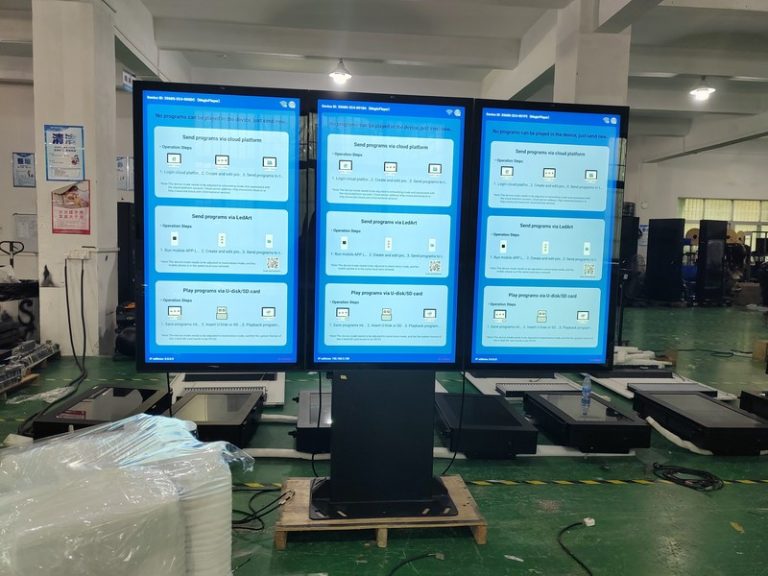
A metro station does not communicate with passengers through one message alone. Directional guidance, operating notices and commercial content may all compete for attention along the same route. For an outdoor metro station project in Malaysia, ZXT LCD completed three standing display units, with each unit integrating three 55-inch portrait screens in one horizontal structure. All three units have been inspected and shipped.
This outdoor metro digital signage configuration creates three adjacent content zones instead of relying on one oversized canvas. The screens can carry related information or separate messages according to the operator’s publishing plan. The image shows the equipment during factory preparation; it does not establish that the displays have already been installed or commissioned at the station.
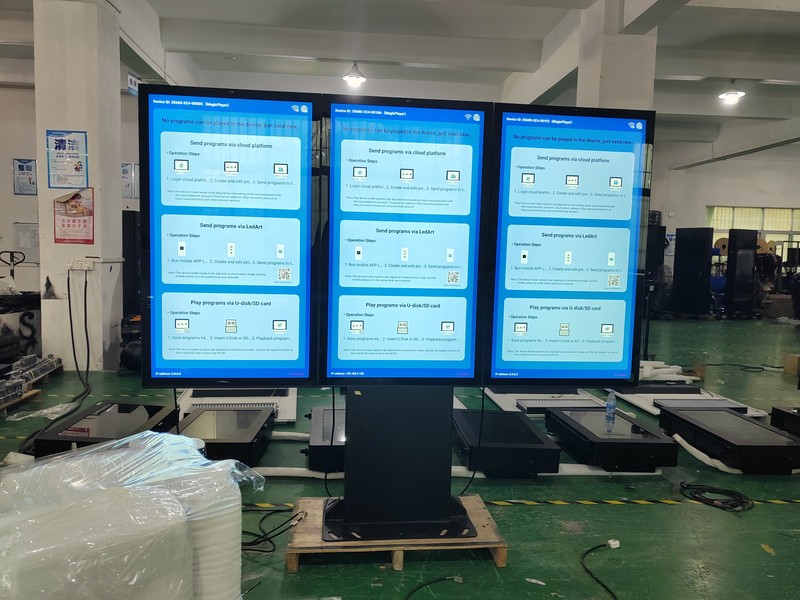
Placing three portrait screens side by side gives the station operator a wider communication surface while retaining familiar vertical content proportions. One screen may be assigned to passenger guidance, another to service notices and the third to advertising, or the three displays may be designed as a coordinated visual sequence.
The hardware alone does not automatically synchronize content. The media player, content management method and publishing schedule must be selected and configured for the intended workflow. If content is expected to move across all three screens, resolution, timing and software compatibility should be tested before deployment.
For passengers, the value of the layout depends on clear information hierarchy. Important wayfinding should not be hidden by promotional material, and text size must match the actual viewing distance and walking speed around the outdoor station area.
Outdoor station approaches can include ticketing routes, drop-off points, transfer paths and commercial areas. A wide three-screen structure needs to be positioned where it remains visible without narrowing pedestrian space or interfering with accessibility and emergency movement.
The installation team should confirm the direction from which passengers approach, the distance available for viewing and whether sunlight or nearby structures create glare. The final screen specification must be matched to the real light conditions; this article does not assign an unconfirmed brightness value.
Ground fixing, power supply, network routing and maintenance clearance should be included in the station engineering plan. Although the display is a self-contained standing structure that does not depend on an existing wall, it still requires permanent fixing based on the ground condition and local safety requirements.
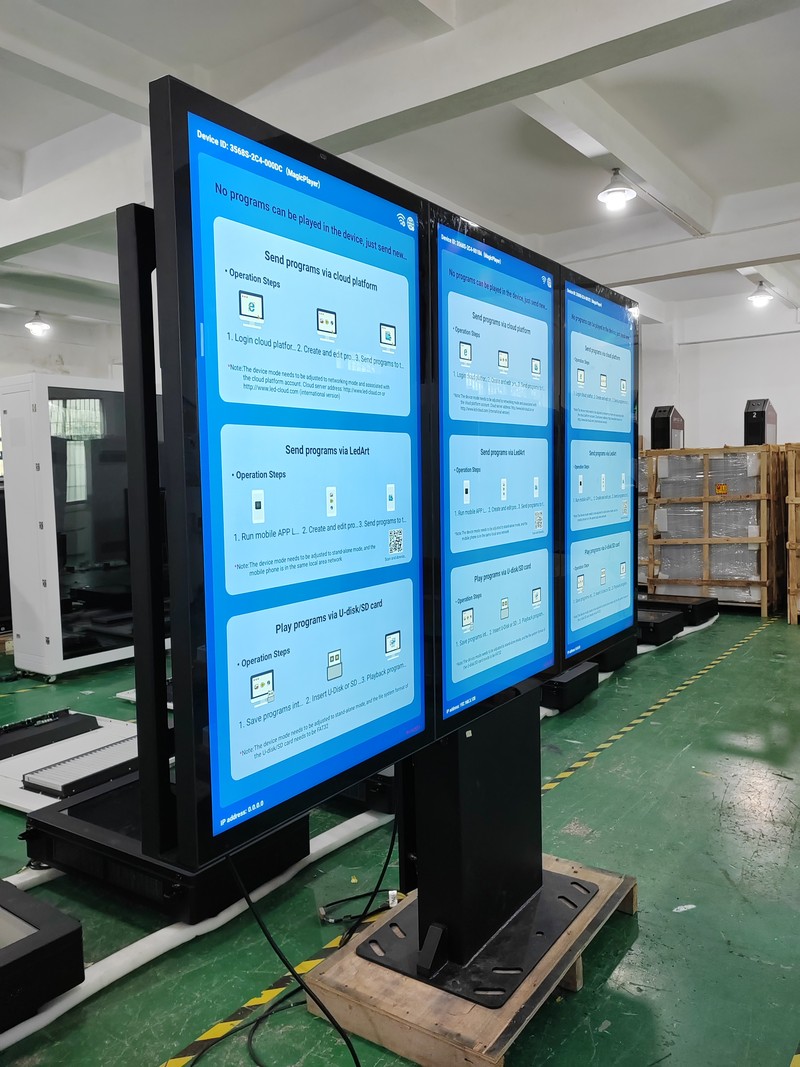
A multi-screen enclosure introduces alignment requirements that do not exist in a single-screen cabinet. The upper edges, screen openings and spacing between the three portrait displays should remain consistent so the completed structure looks intentional from normal viewing positions.
Internal planning must also allow each screen and related component to be inspected without confusing cable routes. Access points should be coordinated with the station’s available maintenance space, especially where technicians may need to work near a passenger route.
During production, ZXT LCD reviewed the confirmed enclosure arrangement, visible alignment and screen operation. Unconfirmed details such as the operating system, protection rating, cooling method and touch function are not added to this project description.
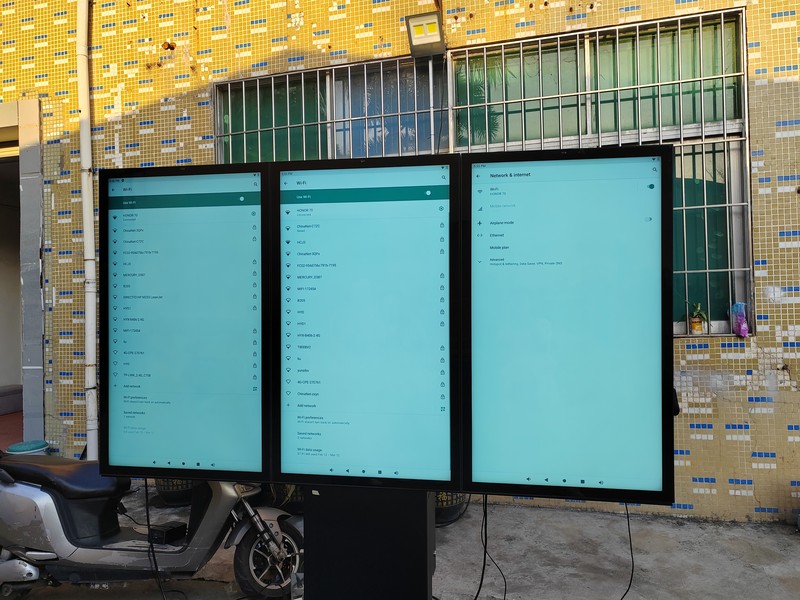
The order contained three complete three-screen units. Batch consistency matters because differences in overall height, base position, cabinet finish or screen spacing can complicate site preparation and content design.
Before shipment, the units were checked for display operation, enclosure assembly, visible condition and the confirmed accessories. Export packing was prepared for the wide screen structure and lower cabinet so that individual sections would be protected during international transport.
All three units have been shipped to Malaysia. Shipment confirms completion of manufacturing, inspection and dispatch, but it does not mean the metro installation or passenger operation has already begun.
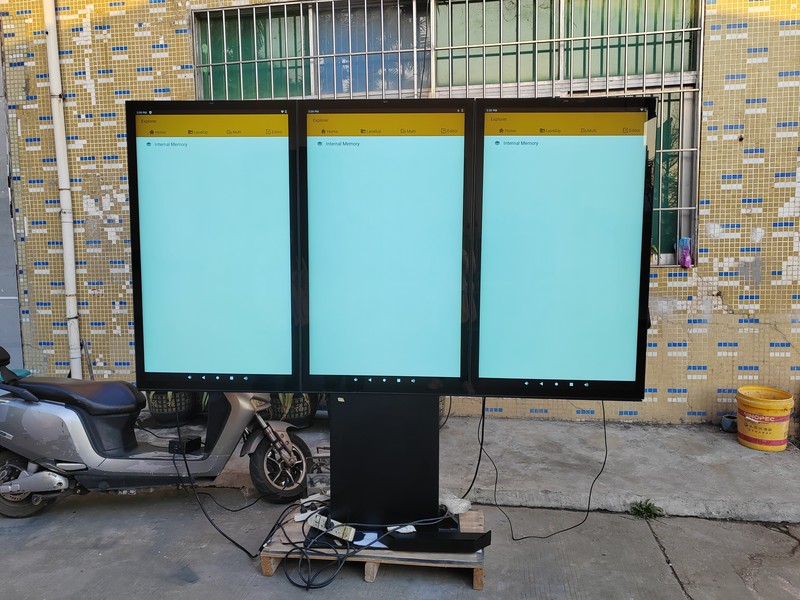
Project teams should provide the installation drawing, outdoor exposure, viewing direction, operating hours, planned content divisions and required publishing method. They should also confirm the fixing foundation, wind-related engineering, electricity, network access, drainage and a safe maintenance route.
ZXT LCD supports international outdoor display projects through enclosure preparation, component integration, functional inspection and export packing. This Malaysian project demonstrates how outdoor metro digital signage can combine three portrait screens into a structured information point while keeping site engineering and content operation clearly defined.
Explore more outdoor LCD display solutions from ZXT LCD.
If you would like to get the specification about above product, please contact our sales team for detailed specifications and a project quote.