Phone:
+8618098949445
Physical address:
604, Building 1, Sanyu Industrial Park, Xinwei Fourth Industrial Zone, Xinzhuang Community, Majan Street, Guangming District, Shenzhen

Phone:
+8618098949445
Physical address:
604, Building 1, Sanyu Industrial Park, Xinwei Fourth Industrial Zone, Xinzhuang Community, Majan Street, Guangming District, Shenzhen

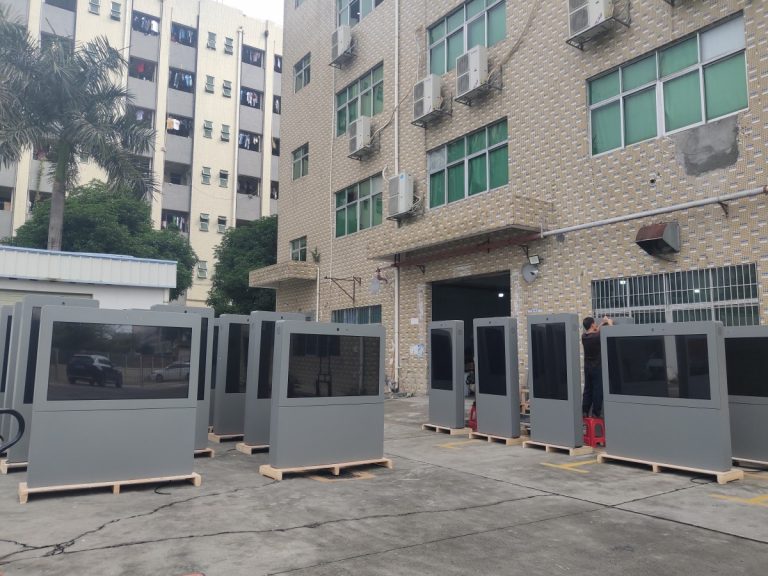
Two primary display technologies dominate the outdoor digital signage market: direct-view LED video walls and high-brightness LCD kiosks. Mention outdoor advertising to most people, and they immediately picture colossal LED billboards towering over expressways. In reality, outdoor LCD digital signage holds distinct, indispensable commercial value across numerous close-range scenarios, representing a highly pragmatic visual solution.
Direct-view outdoor LED displays utilize self-emissive discrete lamp diodes. Delivering ultra-high luminous output visible across vast distances, they excel across colossal long-range installations such as highway billboards and building crown displays. However, physical pixel pitch limitations mean that viewing an LED display from close range reveals noticeable dot-matrix pixelation, compromising typography and image crispness.
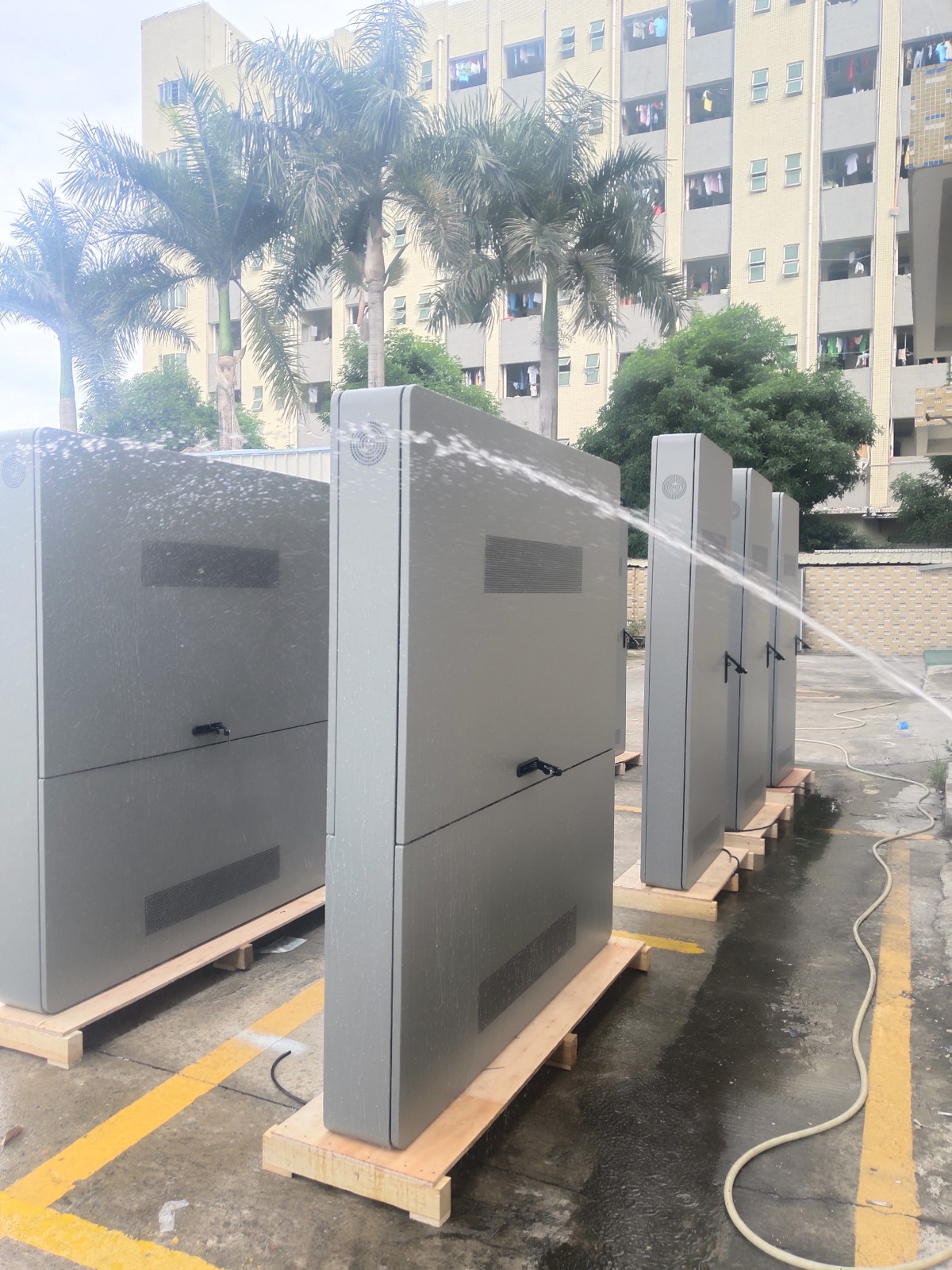
Outdoor LCD kiosks take a different technical path. Utilizing high-efficiency LED backlight arrays behind an optical liquid crystal layer, LCD panels deliver exceptional pixel density, razor-sharp typography, and smooth, photorealistic color rendering. In high-traffic locations where pedestrian viewing distances are close (such as shopping mall entrances, bus shelters, and elevator breezeways), LCD visual fidelity significantly outperforms same-sized LED displays.
In short: LED solves the challenge of being ‘seen from afar,’ while LCD solves the challenge of being ‘read clearly up close.’
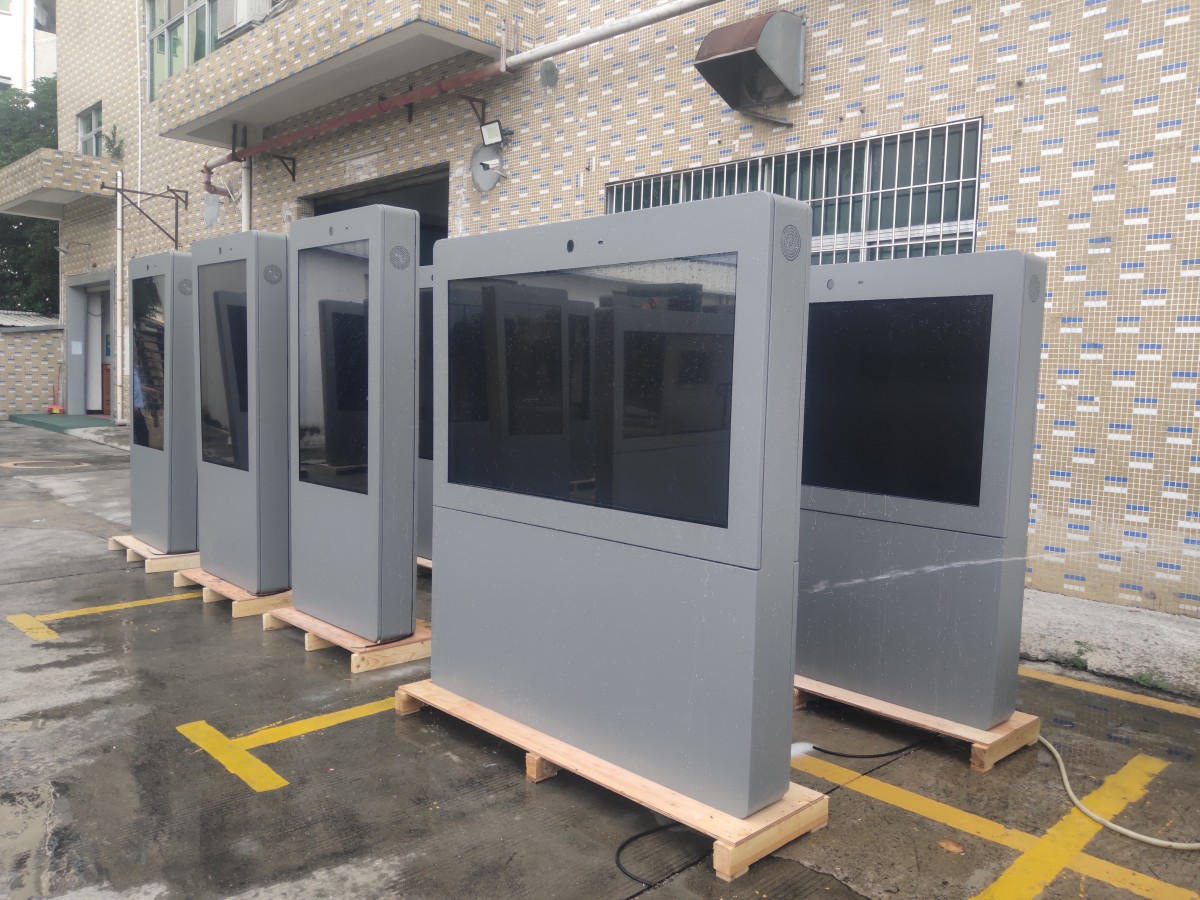
Deploying an LCD screen outdoors is fundamentally different from indoor installations. Indoor spaces offer climate-controlled temperatures and predictable lighting, whereas outdoor kiosks must endure blistering summer heat, torrential downpours, direct solar glare, and airborne dust.
First, Luminance: Intense daylight washes out ordinary LCD panels. Outdoor LCD kiosks must integrate commercial high-brightness backlights—typically delivering over double the luminance of indoor models—to guarantee sunlight readability. However, elevated brightness increases thermal output and power consumption, demanding balanced optical and thermal engineering.
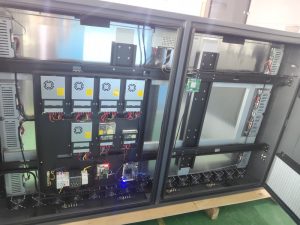
Second, Thermal Management: Liquid crystal cells are sensitive to heat; excessive temperatures cause liquid crystal clearing (black spots), slow response times, or permanent driver damage. Outdoor kiosks require robust thermal systems, commonly deploying forced-air convection or sealed compressor air conditioning, which is essential in hot southern climates.
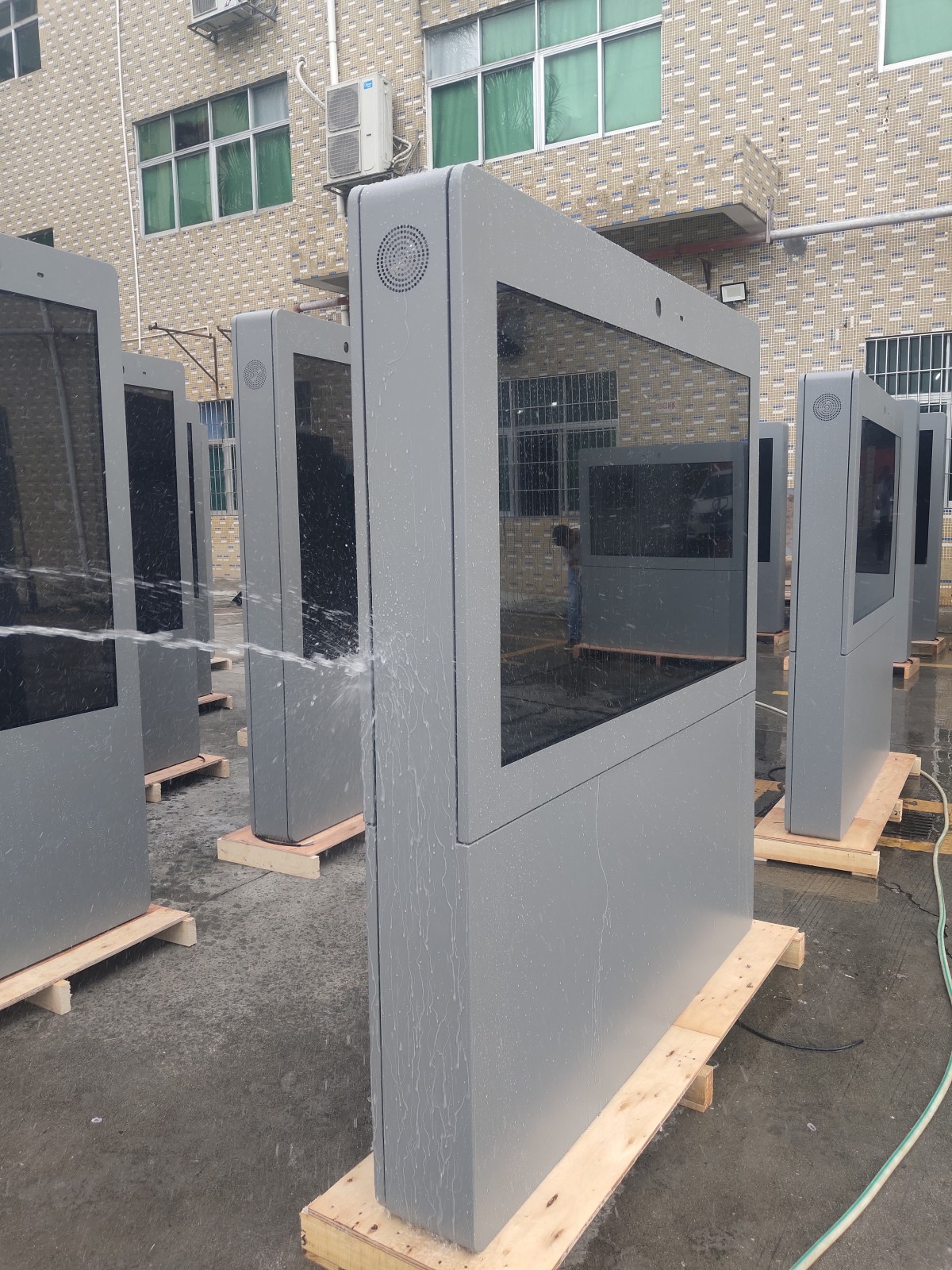
Third, Ingress and Impact Protection: Enclosures must achieve certified IP55 or IP65 ratings to bar moisture and dust infiltration. Screen faces are protected with tempered safety glass treated with anti-glare (AG) or anti-reflective (AR) optical coatings to preserve visibility under sunlight while resisting physical impacts.
While buyers focus heavily on hardware specs, day-to-day operations revolve around content management. Outdoor LCD kiosks support remote cloud content publishing over 4G/5G or wired networks. However, because outdoor networks can fluctuate, verified local offline caching and automated fallback mechanisms are essential to prevent blank screens during network drops.
Furthermore, mounting configurations must be planned in advance. Freestanding pedestals, wall-mounted brackets, and suspended ceiling mounts each suit specific architectural sites. Freestanding units offer visual prominence but consume floor space; wall mounts conserve walkway clearance but require load-bearing structural evaluation; and suspended mounts suit crowded hubs but involve rigorous overhead safety engineering. Evaluating site mounting constraints alongside hardware specifications ensures a successful deployment.
If you are sourcing high-reliability outdoor digital signage hardware, consider these commercial specifications:
ZXTLCD provides comprehensive ODM/OEM manufacturing for outdoor displays—including sunlight-readable brightness up to 4000 nits, IP65/IP66 weatherproof enclosures, intelligent temperature management, and integrated remote CMS.