Phone:
+8618098949445
Physical address:
604, Building 1, Sanyu Industrial Park, Xinwei Fourth Industrial Zone, Xinzhuang Community, Majan Street, Guangming District, Shenzhen

Phone:
+8618098949445
Physical address:
604, Building 1, Sanyu Industrial Park, Xinwei Fourth Industrial Zone, Xinzhuang Community, Majan Street, Guangming District, Shenzhen

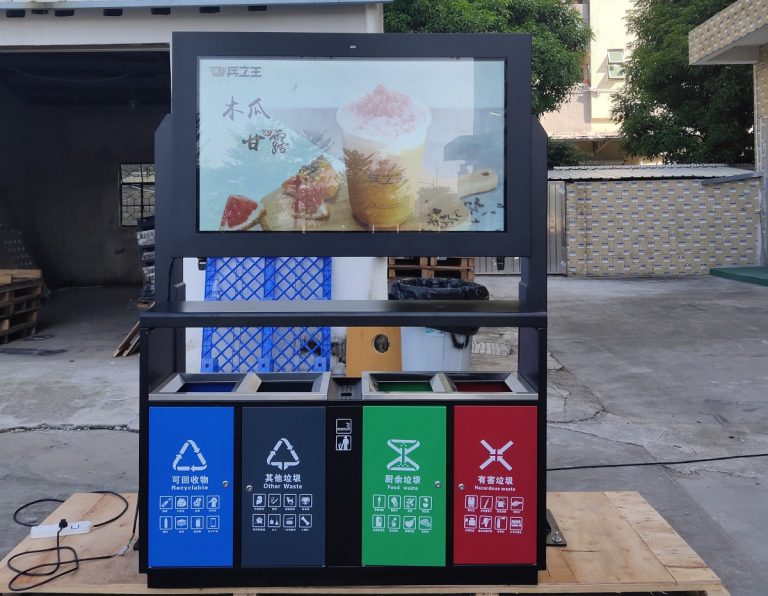
Tourist attractions, municipal parks, and commercial shopping centers share a common operational reality: high pedestrian volumes, multi-directional traffic flow, and intensive information demands. Visitors look for trail maps, shoppers seek promotional sales, and administrators must issue real-time public notices. Relying solely on static printed signage and traditional posters means slow content updates and an inability to address pedestrian streams arriving from different angles.
The 65-inch ultra-slim double-sided outdoor digital signage kiosk is engineered specifically for dynamic visual communication in such high-traffic outdoor venues.
Dual-Sided Display (Two Screens in One Footprint): In open outdoor corridors and walkways, visitors approach from opposing directions. Equipped with screens on both front and rear faces, a dual-sided unit delivers visual visibility regardless of pedestrian approach direction, doubling the audience reach of a single installation footprint. Whether the two sides broadcast identical mirrored content or display independent media playlists depends on internal controller configurations, which should be specified prior to procurement.
Expansive 65-Inch Canvas for Long-Distance Readability: Outdoor grounds are wide and open, with visual viewing distances far exceeding typical indoor settings. The 65-inch display format is well-suited for plazas, entry portals, and primary pedestrian arteries where distant legibility is vital, rendering park trail maps, promotional banners, and 4K video with outstanding clarity.
Ultra-Slim Structural Profile: Traditional double-sided outdoor kiosks often look bulky and heavy. An ultra-slim profile gives the kiosk a streamlined, contemporary silhouette with a compact floor footprint, minimizing visual clutter when placed at park gates, trail borders, or outdoor retail plazas.
All-Weather Outdoor Durability: Outdoor equipment must withstand harsh direct sunlight, driving rain, airborne dust, and seasonal temperature swings, demanding high brightness, robust ingress protection, and reliable thermal management. Specific brightness ratings (in nits), IP ingress protection levels, and operating temperature ranges should be verified against official product data sheets.
Centralized Remote Content Management (CMS): Managing dozens of scattered displays across an expansive park or shopping complex via manual USB drives is slow and labor-intensive. With cloud-enabled remote publishing, operations teams can centrally schedule, publish, and time-block media content from a single dashboard, while monitoring real-time device health to deploy urgent notices instantly across all screens.
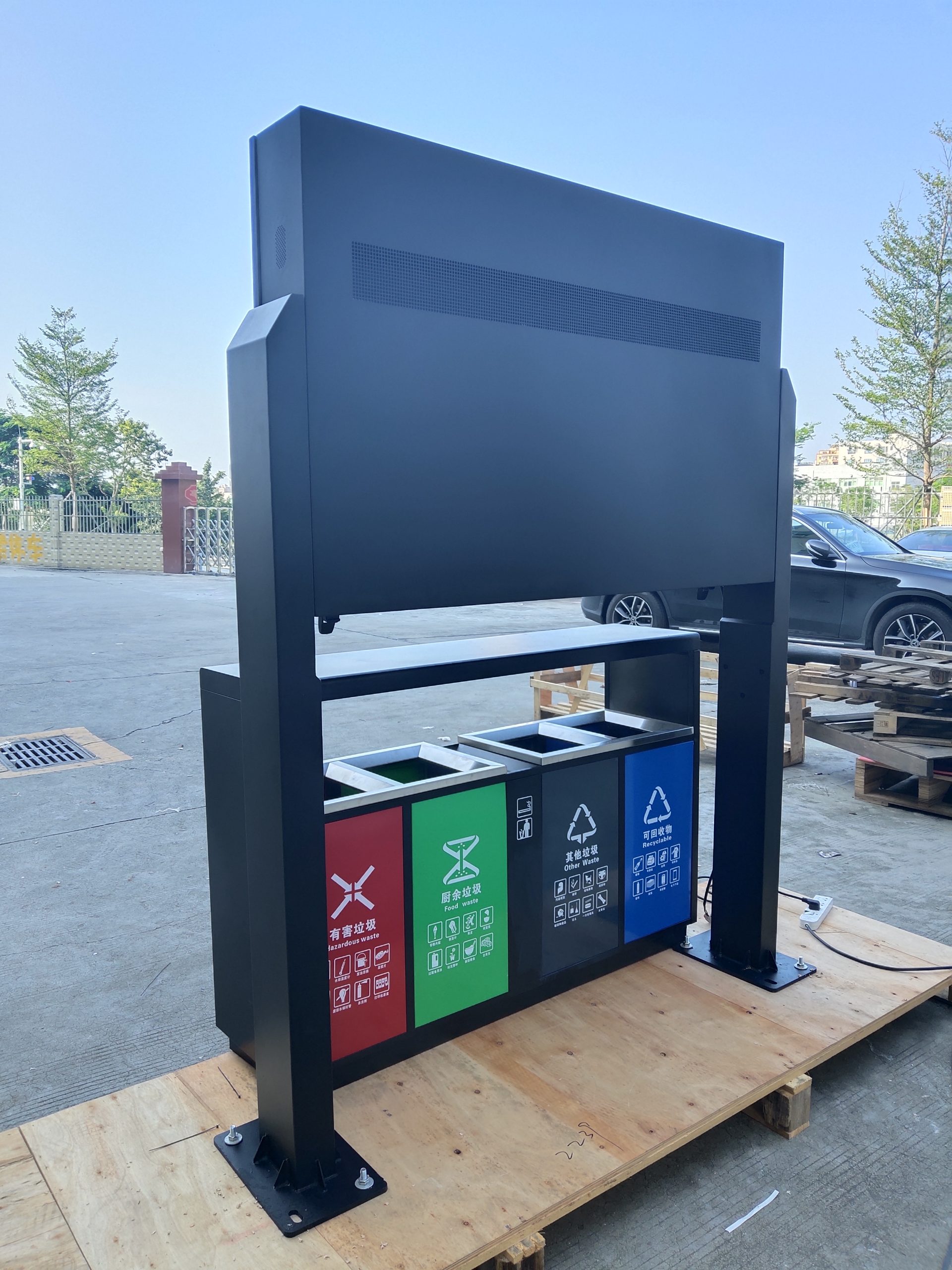
Tourist Scenic Spots: At entry gates, screens showcase ticket pricing, operational hours, and park regulations. Along primary routes, they provide directional wayfinding and cultural heritage intros. In the event of weather warnings, capacity limits, or temporary trail closures, emergency alerts can be broadcast network-wide. The dual-sided design is particularly effective along two-way pedestrian boardwalks.
Municipal Parks: Displays present interactive park maps, event schedules, safety guidelines, and environmental conservation notices. Content can be updated seasonally or for festivals, delivering far greater flexibility and eco-friendliness than disposable paper prints.
Commercial Shopping Centers: Outside plazas and main entrance plazas, screens broadcast brand advertisements, seasonal sales promotions, and store operating hours, while offering directory navigation for shoppers. Venue operators can time-share advertising slots between anchor tenants to maximize advertising yield.
Other Public Venues: Theme parks, sports stadiums, transit hubs, university campuses, and business park thoroughfares—wherever high outdoor pedestrian traffic converges with timely information delivery, double-sided displays prove their worth.
Adequate Screen Luminance: Outdoor daylight is intense; insufficient luminance causes washed-out, unreadable visuals. Inquire about the exact brightness rating (typically 2,000–3,000 nits for outdoor readability) and inform the supplier whether the display faces unshaded direct solar exposure.
Certified Ingress Protection (IP Rating): ‘Outdoor’ does not automatically mean all-weather impervious. Verify the certified IP rating (e.g., IP55 or IP65) to ensure resistance against driving rain, torrential downpours, and particulate ingress, as well as operational limits under extreme summer heat and winter sub-zero freezing.
Dual-Sided Architectural Design: Confirm whether the unit incorporates two independent LCD panels back-to-back or shares components, whether both screens support asynchronous content playback, and how thermal dissipation is managed. Compact dual-sided chassis demand meticulous thermal engineering.
Digital Signage Software (CMS) Capabilities: Inquire whether software licenses or recurring server maintenance fees apply, whether multi-zone screen partitioning, automated dayparting, and hardware telemetry monitoring are supported, and what network connectivity is required. Parks often have weak Wi-Fi, making 4G/5G cellular connectivity and offline playback caching critical.
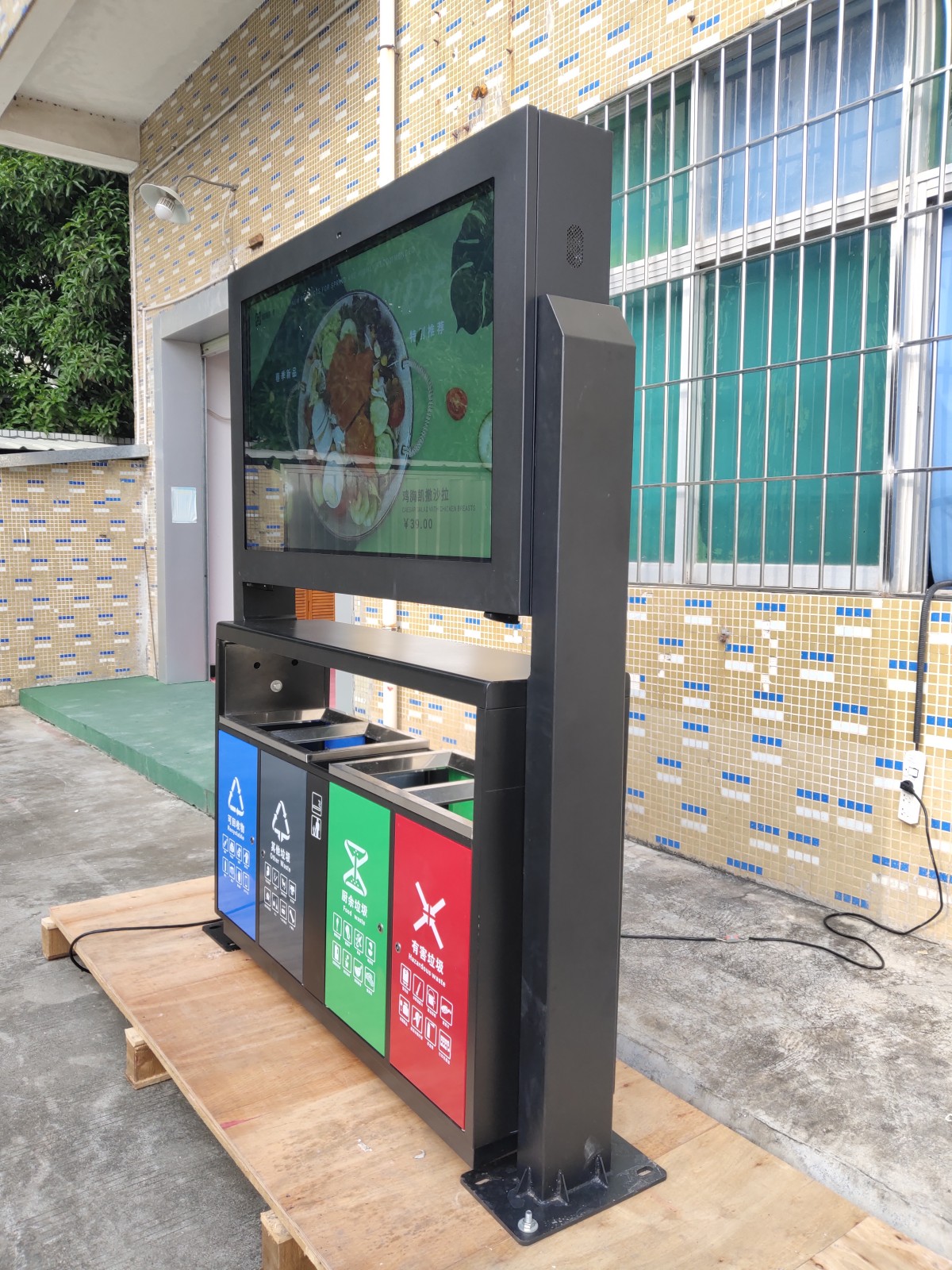
Civil Foundation, Anchoring, and Power Requirements: Clarify whether the kiosk is freestanding, bolted to a concrete foundation, or ground-embedded; calculate required concrete footing depth and wind-load resistance; and verify power line conduit routing. Outdoor installations involve public safety and should be handled by certified contractors.
Warranty and Technical Support Commitments: Confirm warranty duration, covered components (power supply, LED backlight, LCD glass), service response turnaround times, and spare parts availability. Equipment downtime in public venues damages visitor experience and should be protected by clear SLA agreements.
Can the two sides of a double-sided kiosk display different content? Yes, this depends on whether the system incorporates dual independent media player channels. Confirm this specification with your supplier prior to ordering.
Does an ultra-slim chassis compromise thermal heat dissipation? A slim chassis does not necessarily equate to poor cooling; it depends on internal thermal architecture. Outdoor high-brightness screens generate substantial heat, so ask suppliers about their forced air cooling or heat exchanger systems and long-term operating stability.
Can content be updated remotely if park network connectivity is poor? This depends on supported connectivity options and offline caching. For remote outdoor areas, choose models equipped with 4G/5G cellular modules and players supporting offline local playlist storage.
Are these displays structurally safe in high winds? Large double-sided displays present substantial wind-load surface area. They require engineered concrete foundations and heavy-duty expansion anchor cages evaluated and installed by qualified structural personnel.
The core commercial value of a 65-inch ultra-slim double-sided outdoor advertising kiosk lies in addressing pedestrian traffic from two directions while enabling synchronized remote updates—making it ideal for tourist attractions, parks, and retail centers. When procuring equipment, prioritize luminance, IP protection, thermal cooling, CMS software, and after-sales service over superficial dimensions and low sticker prices.
ZXTLCD specializes in commercial-grade outdoor LCD display products. If your project involves outdoor digital signage deployments, share your application scenario, site environment, and unit requirements with our engineering team to assess the optimal solution. Official website: www.outdoorlcddisplays.com/” target=”_blank” rel=”noopener”>www.outdoorlcddisplays.com
If you are sourcing high-reliability outdoor digital signage hardware, consider these commercial specifications:
ZXTLCD provides comprehensive ODM/OEM manufacturing for outdoor displays—including sunlight-readable brightness up to 4000 nits, IP65/IP66 weatherproof enclosures, intelligent temperature management, and integrated remote CMS.