Phone:
+8618098949445
Physical address:
604, Building 1, Sanyu Industrial Park, Xinwei Fourth Industrial Zone, Xinzhuang Community, Majan Street, Guangming District, Shenzhen

Phone:
+8618098949445
Physical address:
604, Building 1, Sanyu Industrial Park, Xinwei Fourth Industrial Zone, Xinzhuang Community, Majan Street, Guangming District, Shenzhen

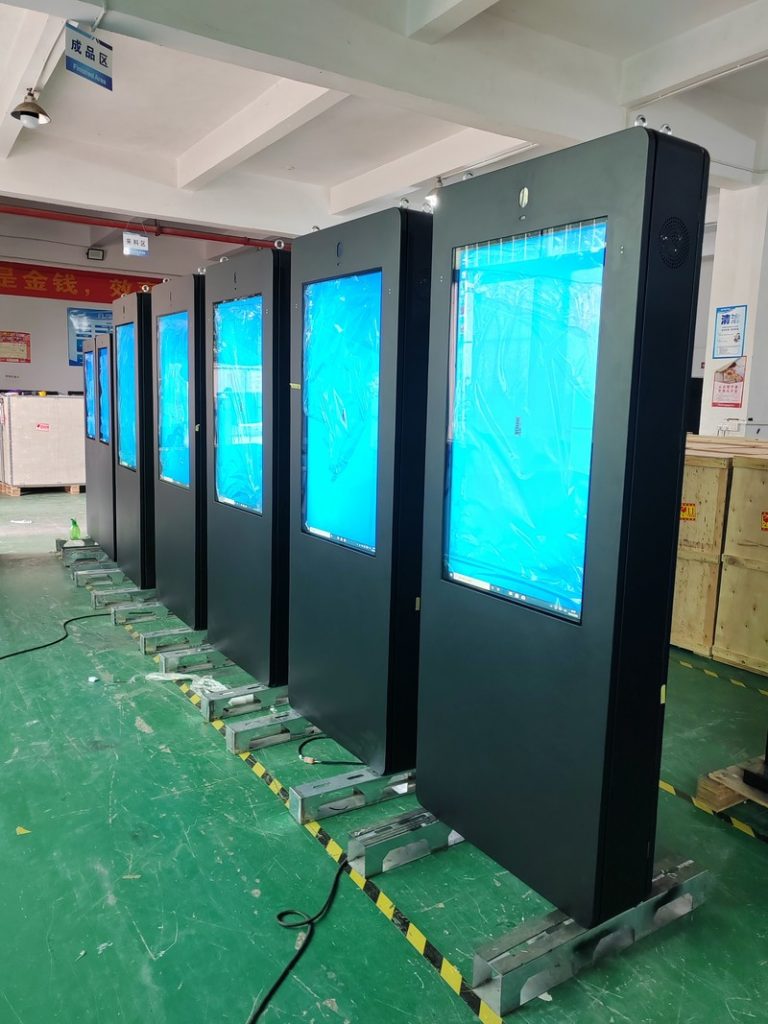
Procurement managers frequently encounter a perplexing pricing puzzle: for the exact same 55-inch display diagonal, why does an outdoor commercial digital signage kiosk cost several times more than an indoor digital display?
The core distinction centers on a single operational imperative: continuous 24/7 all-weather operational reliability. Indoor displays operate inside climate-controlled buildings with stable temperatures, controlled humidity, and soft ambient lighting. Outdoor kiosks must independently conquer blistering solar heat, driving rain, windborne sand, sub-zero freezes, and electrical lightning surges—all while running non-stop year-round. Achieving this demanding standard requires major upgrades across virtually every component, accumulating real manufacturing overhead.
Standard indoor commercial screens provide moderate luminance (350–500 nits), which is completely sufficient for indoor spaces. Outdoor daylight, however, is intensely bright; ordinary screens appear entirely washed out, rendering content unreadable. Outdoor kiosks must integrate high-brightness industrial panels rated between 2,000 and 3,000 nits to preserve vivid sunlight visibility.
High-brightness LED backlights carry substantial bill-of-materials costs. Furthermore, elevated brightness generates significant thermal output, imposing rigorous demands on constant-current driver boards, power inverters, and cooling architectures. Luminance must also adapt dynamically—brightening during midday sun and dimming at night to conserve power and prevent nocturnal glare. This integrated optical system represents the first major cost premium.
An outdoor kiosk housing involves far more than simply adding a metal cover. Enclosure seams require custom EPDM rubber gaskets; cable glands must feature liquid-tight seals; and cooling vents must facilitate convective airflow while barring driving rainwater. The display face is fitted with optically bonded tempered safety glass treated with anti-reflective (AR) coatings to diffuse glare and eliminate dust voids.
These custom structural extrusions, precision gaskets, and specialized optical bonding processes demand dedicated tooling and rigorous testing. Furthermore, weatherproofing and thermal cooling are naturally conflicting engineering goals: sealing an enclosure tightly traps internal heat. Balancing sealed protection with efficient heat transfer requires sophisticated engineering and higher fabrication costs.
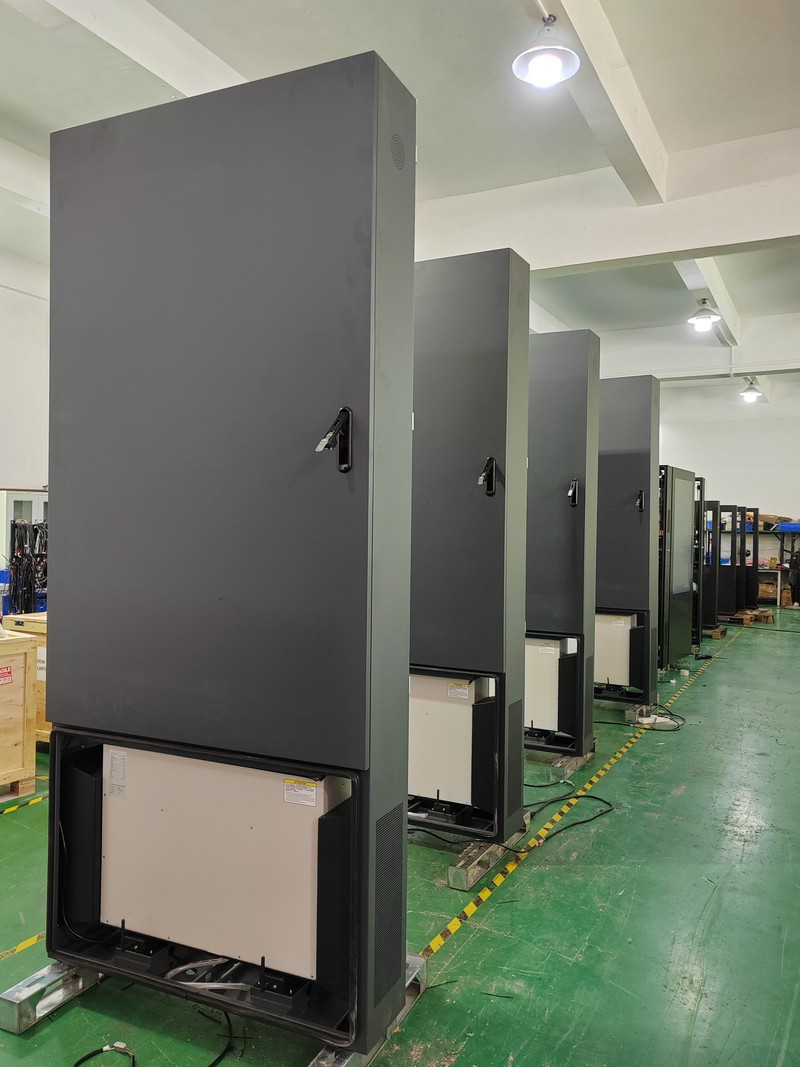
Under blistering summer sun, internal chassis temperatures can soar rapidly; excessive heat triggers panel isotropic clearing (black patches), thermal shutdown, or permanent driver failure. In freezing winter climates, liquid crystal response times slow dramatically and displays risk cold-boot failure.
Consequently, outdoor kiosks integrate intelligent thermal management systems—such as high-flow variable-speed centrifugal fans, air-to-air heat exchangers, or dedicated compressor air conditioning units—paired with wide-temperature electronic components and internal heating elements. Operating thresholds must be validated by certified laboratory thermal chambers, adding real engineering overhead.
Outdoor electrical feeds are exposed to grid transients, voltage sags, and lightning-induced surges far more severe than indoor circuits. Outdoor kiosks integrate industrial-grade surge protection devices (SPDs), robust grounding architectures, and wide-input power supplies.
These protective safeguards are invisible during calm weather, yet prove invaluable during severe electrical storms. Without them, a single voltage transient can permanently destroy the entire display system.
Outdoor chassis construction utilizes heavy-gauge galvanized steel or aviation-grade aluminum extrusions. Continuous outdoor exposure subjects metal to solar UV degradation, acid rain, and coastal salt spray corrosion.
Multi-stage anti-corrosion treatments—such as zinc phosphating, architectural powder coating, and marine-grade epoxy finishes—incur significant processing expenses. Additionally, structural engineering must account for local wind loads, pedestrian impact resistance, and tamper-proof security locks, elevating manufacturing costs.
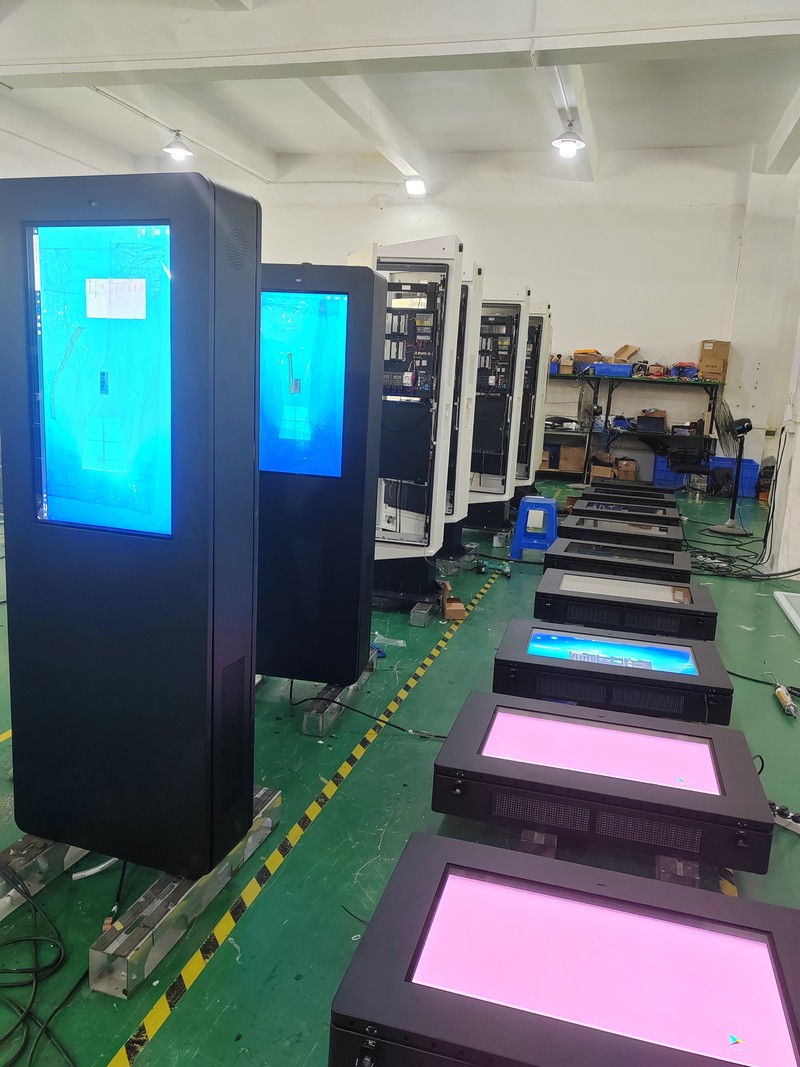
Outdoor displays are widely dispersed across public plazas, bus lines, and parks. Dispatching technicians to update content or troubleshoot minor faults on-site is costly. Outdoor kiosks prioritize robust cloud networking—incorporating industrial 4G/5G cellular modems, high-gain antennas, and digital signage CMS platforms supporting remote scheduling, automated dayparting, and hardware telemetry monitoring.
Industrial communication modems, CMS software licenses, and secure backend servers represent real, essential operational investments.
If an indoor screen malfunctions, bringing it in for repair is simple. If a public outdoor kiosk fails, dispatching field technicians, safety equipment, and boom lifts is expensive. To minimize field failures, outdoor hardware undergoes rigorous factory thermal cycling, salt-spray validation, water-jet ingress testing, and prolonged burn-in.
These intensive quality assurance protocols and long-term spare-parts commitments are factored into the product’s final pricing.
Not necessarily; procurement should reflect real-world site conditions.
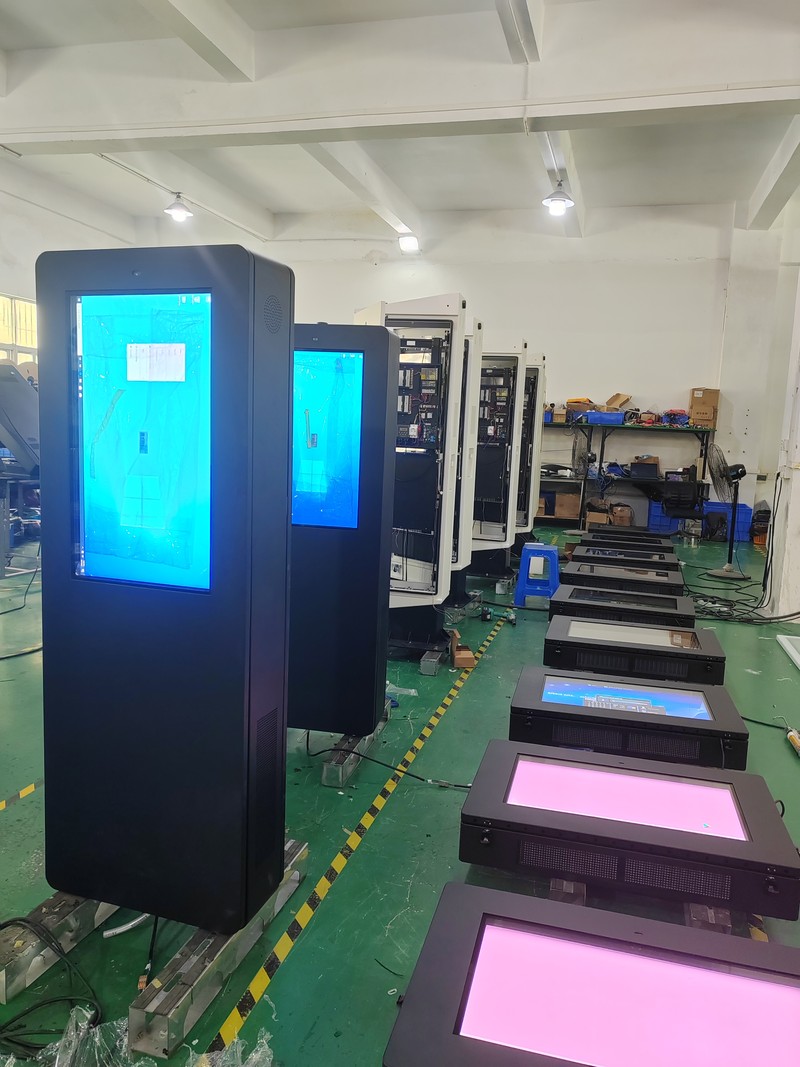
Locations genuinely exposed to all-weather elements—such as tourist parks, public pedestrian boulevards, transit plazas, and highway service areas—require certified full-outdoor kiosks. However, locations situated beneath deep canopies, building overhangs, or inside showcase windows face milder conditions, where semi-outdoor high-brightness displays suffice without incurring the full expense of all-weather outdoor hardware.
Conversely, deploying standard indoor displays outdoors to cut costs is a false economy: premature failure, moisture shorts, and repair costs quickly exceed initial savings. Accurately detailing physical site parameters to your supplier is the most prudent procurement approach.
What price ratio between outdoor and indoor digital displays is reasonable? There is no single multiplier; pricing depends on luminance (nits), IP ingress certification, thermal systems (fans vs. air conditioning), and connectivity. Comparing itemized specifications and certified test reports provides far more clarity than evaluating bottom-line prices alone.
Can indoor displays be installed in semi-outdoor sheltered locations? Only if the site is completely sheltered from rain, direct sunlight, and extreme thermal swings. In mild sheltered spaces, semi-outdoor high-brightness models provide a balanced alternative, evaluated through initial pilot trials.
How can buyers verify whether an outdoor display is genuinely all-weather qualified? Inspect official laboratory test reports covering IP65 ingress protection, wide-temperature operating limits, and salt-spray corrosion resistance, and request client reference installations in comparable climates.
Outdoor digital signage carries a higher price tag because it integrates high-brightness panels, weatherproof sealing, active climate cooling, surge suppression, anti-corrosion metallurgy, and cloud telemetry—all engineered for uncompromised, year-round operational stability. Aligning your hardware choice with your specific installation environment ensures optimal commercial value.
ZXTLCD specializes in commercial-grade LCD stretched bar displays tailored for retail shelving, checkout counters, pedestrian corridors, and showcase window interiors. If your project involves elongated commercial visual signage, share your installation dimensions, site conditions, and unit requirements with us. Official website: www.outdoorlcddisplays.com/” target=”_blank” rel=”noopener”>www.outdoorlcddisplays.com
If you are sourcing high-reliability outdoor digital signage hardware, consider these commercial specifications:
ZXTLCD provides comprehensive ODM/OEM manufacturing for outdoor displays—including sunlight-readable brightness up to 4000 nits, IP65/IP66 weatherproof enclosures, intelligent temperature management, and integrated remote CMS.