Phone:
+8618098949445
Physical address:
604, Building 1, Sanyu Industrial Park, Xinwei Fourth Industrial Zone, Xinzhuang Community, Majan Street, Guangming District, Shenzhen

Phone:
+8618098949445
Physical address:
604, Building 1, Sanyu Industrial Park, Xinwei Fourth Industrial Zone, Xinzhuang Community, Majan Street, Guangming District, Shenzhen

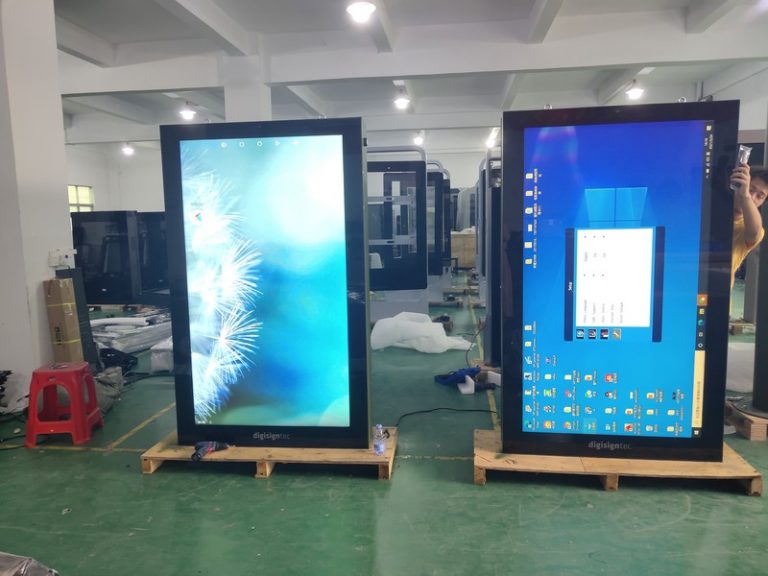
An engineering reality frequently surprises operators: when outdoor digital signage malfunctions during humid rainy seasons, direct rainwater infiltration is rarely the culprit.
The kiosk carries certified waterproof ratings and survives a torrential storm unscathed. Yet after several days of continuous overcast drizzle, internal condensation fogs the inner glass face, or morning boots present scrambled screens that mysteriously normalize once midday sunshine warms the chassis. In such scenarios, the underlying challenge is not bulk water leaks, but trapped ambient humidity and condensation.
Regardless of enclosure sealing, a commercial display chassis cannot remain in an absolute hermetic vacuum. During daytime operation, internal components generate heat, causing internal air to expand and vent slightly outward. At night, during shutdowns, or as rain rapidly cools the exterior, internal air contracts, drawing in damp exterior air through micro-seams.
Through this thermal breathing cycle, ambient moisture gradually accumulates inside the enclosure. When temperature swings occur, airborne water vapor condenses into liquid droplets against cold inner glass surfaces and metal chassis walls—triggering internal optical fogging. Therefore, effective moisture management requires both sealing out driving rain and preventing internal moisture accumulation.
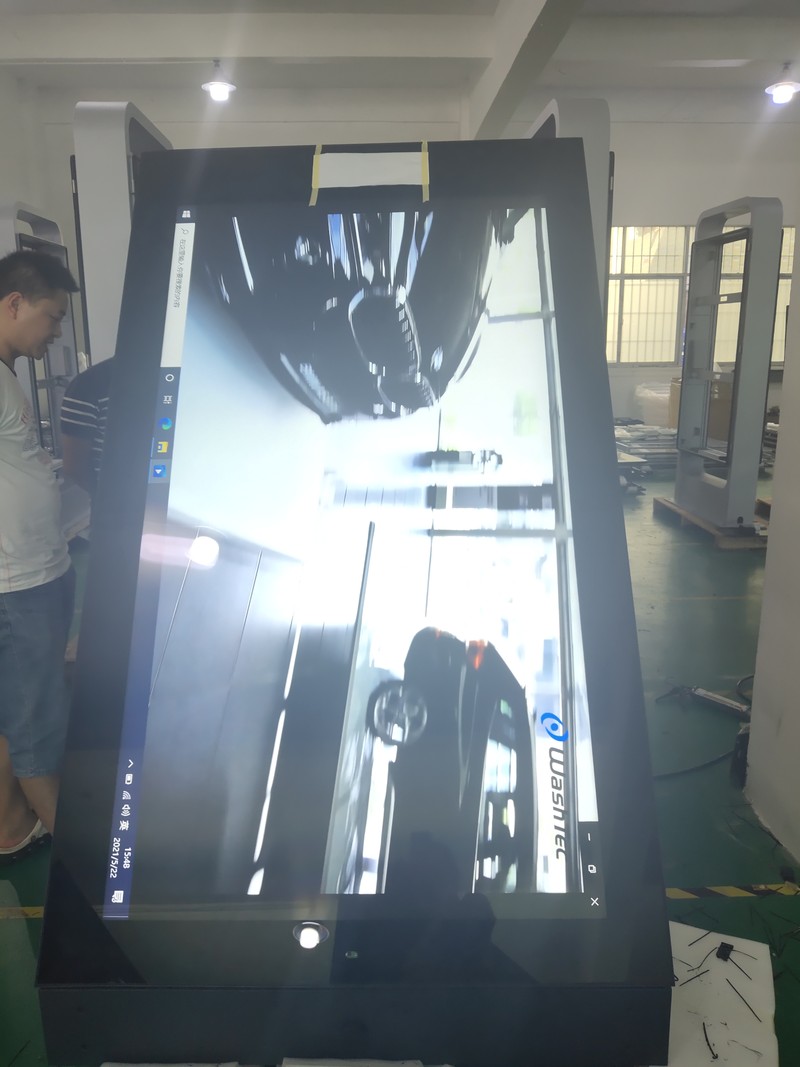
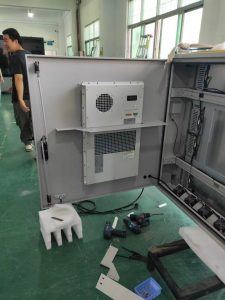
1. Prioritize Internal Climate and Thermal Control: Selecting hardware with active internal climate control is vastly superior to reactive field fixes. Models equipped with smart thermal management actively maintain internal temperature and humidity within safe boundaries, mitigating condensation cycles. Thermal configurations should match regional climates, distinguishing between humid southern coastlines and freezing northern winters.
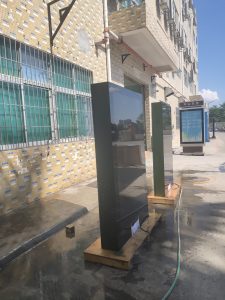
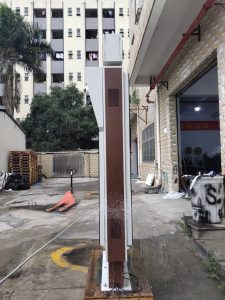
2. Strategic Installation Site Planning: Elevate the kiosk base upon an engineered concrete plinth to prevent immersion in standing puddles. Isolate the unit from direct rainwater runoff beneath roof gutters and storm drains. While architectural canopies provide helpful shelter, preserve generous convective airflow clearance around the chassis.
3. Cable Gland Sealing and Watertight Drip Loops: Cable entry points represent the most vulnerable moisture pathway. Power and signal conduits must feature downward drip loops outside the enclosure, ensuring rainwater drips harmlessly off the cable rather than tracking down into the gland. Seal connector ports with industrial liquid-tight cable glands and waterproof sealant rather than basic electrical tape.
4. Restore Perimeter Gasket Seals After Servicing: This step is frequently overlooked during routine field maintenance. Whenever rear service doors are opened, technicians must ensure EPDM rubber gaskets are seated flush and fasteners torqued uniformly. Aged, hardened, or cracked gasket seals must be replaced immediately to preserve weatherproofing.
5. Conduct Seasonal Inspections Before Rainy Months: Inspect enclosure seams, cable glands, and door latches for wear; verify that air filter louvers are free of dust buildup; and check the plinth base for drainage clearance. A ten-minute proactive inspection prevents costly hardware replacements down the line.
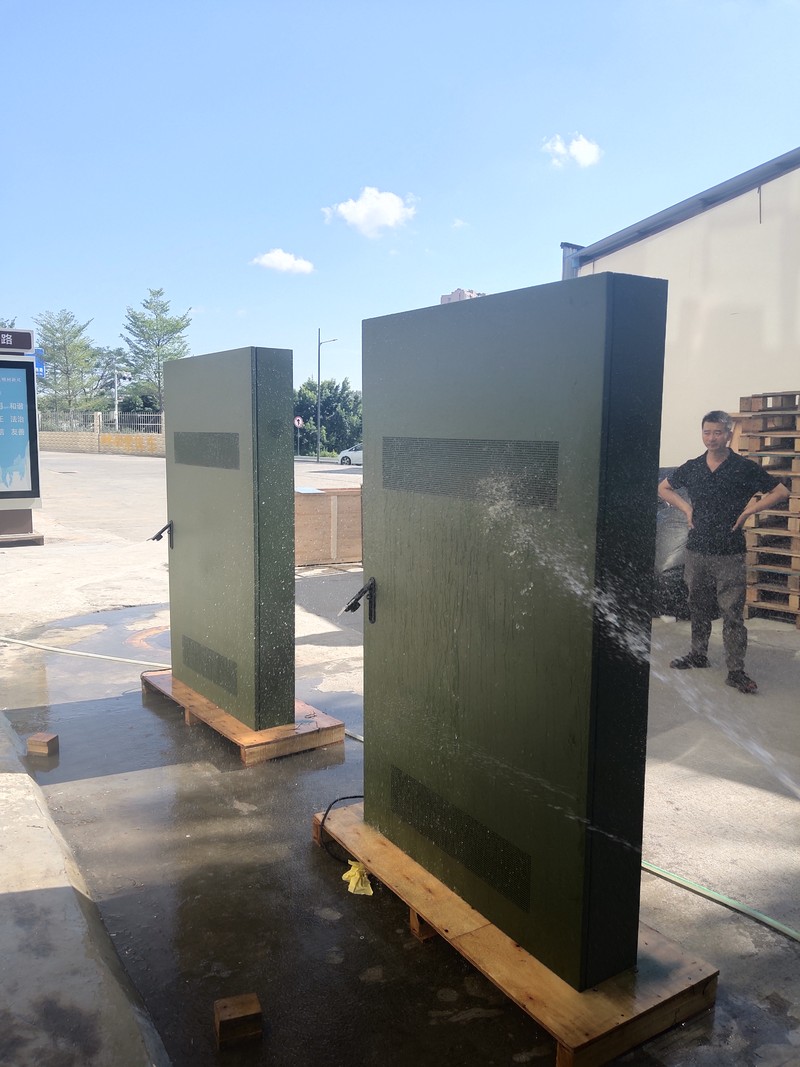
Avoid repeatedly power-cycling the display if moisture is detected. If droplets or heavy internal condensation are visible, disconnect AC power immediately. Open service doors and allow the enclosure to dry naturally in a dry, ventilated area; avoid blasting high-heat industrial blowers directly against optical glass, as excessive localized thermal shock damages polarizers and electronics.
Re-energize the unit only after confirming internal components are thoroughly dry. If display glitching, blackouts, or burning smells persist, refrain from independent disassembly and contact certified service technicians immediately. High-voltage power inverters and sensitive T-Con boards risk secondary damage and severe electric shock.
Many believe that higher IP ratings eliminate the need for maintenance. However, IP65 certified ingress protection verifies resistance against particulate dust and low-pressure water spray; it does not permit water submersion, nor does it counteract physical air-breathing condensation. Disciplined site installation, routine gasket inspections, and smart internal climate control are equally vital to long-term reliability.
Guarding outdoor LCD signage against moisture centers on fundamental principles: internal climate regulation, elevated plinth mounting, properly routed drip loops, diligent gasket resealing after maintenance, and seasonal inspections. Implementing these practices consistently prevents the vast majority of humidity-related failures.
ZXTLCD specializes in the design and manufacturing of commercial outdoor LCD display kiosks, offering freestanding pedestals, wall-mounted displays, interactive touch terminals, battery-powered mobile units, and solar-assisted models, with integrated internal climate control tailored to site conditions. If your project faces severe humidity or rainy-season challenges, share your local climate and site parameters with us to evaluate the ideal configuration. Official website: www.outdoorlcddisplays.com
If you are sourcing high-reliability outdoor digital signage hardware, consider these commercial specifications:
ZXTLCD provides comprehensive ODM/OEM manufacturing for outdoor displays—including sunlight-readable brightness up to 4000 nits, IP65/IP66 weatherproof enclosures, intelligent temperature management, and integrated remote CMS.