Phone:
+8618098949445
Physical address:
604, Building 1, Sanyu Industrial Park, Xinwei Fourth Industrial Zone, Xinzhuang Community, Majan Street, Guangming District, Shenzhen

Phone:
+8618098949445
Physical address:
604, Building 1, Sanyu Industrial Park, Xinwei Fourth Industrial Zone, Xinzhuang Community, Majan Street, Guangming District, Shenzhen

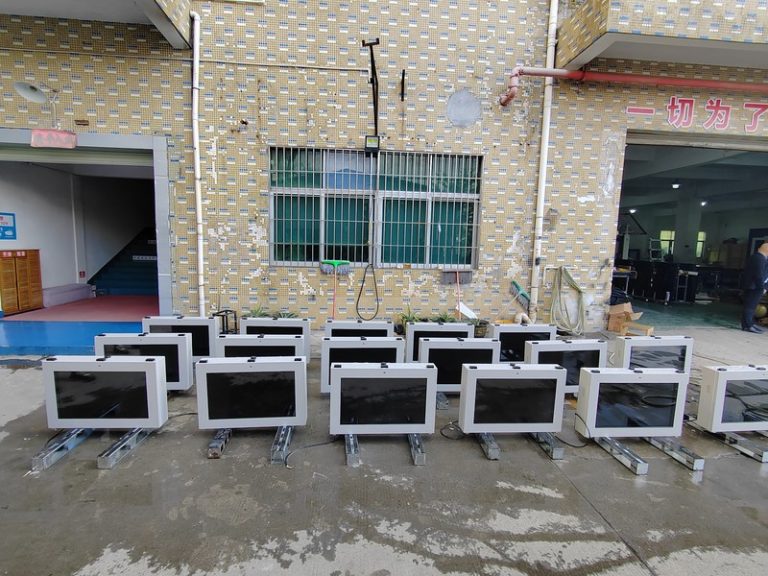
When a commercial display project requires multiple screens, the buyer is not only purchasing individual units. The project also depends on consistent cabinet dimensions, screen positioning, appearance, software settings and packing. A recent batch of 32-inch wall mounted digital signage units at ZXT LCD provides a practical example of how a compact horizontal display project moves through production.
These units use a landscape-oriented, wall-mounted form that is suited to commercial spaces where information needs to remain visible without occupying floor area. Their compact proportions make them easier to position above service counters, on corridor walls, beside reception areas or inside retail fixtures. For a batch order, however, the value of the product comes from more than its size. Buyers need every unit to arrive with a consistent appearance and a configuration that can be deployed without unnecessary rework.
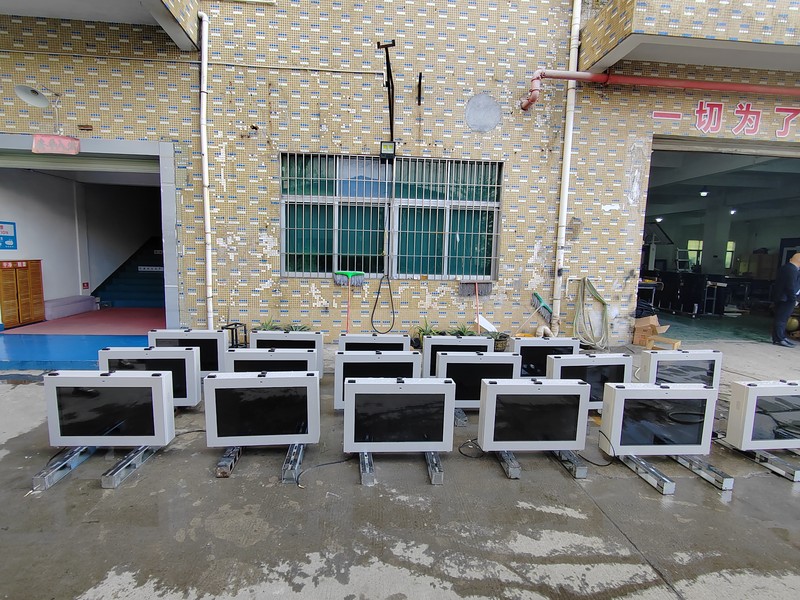
A 32-inch horizontal screen occupies a useful middle position between small information monitors and larger advertising displays. It is large enough to present clear promotional content, directions, service notices or menus, while remaining suitable for walls with limited installation space.
The landscape format is familiar to viewers and works naturally with videos, product images, presentation layouts and split-screen information. It can also fit more easily above counters or along corridors than a portrait display. This makes it a practical option for retail stores, restaurants, office buildings, clinics, transport facilities and customer service locations.
Wall installation keeps the floor clear. This matters in locations where freestanding equipment could interrupt customer movement or reduce available space. It also allows several displays to be positioned at a consistent viewing height across a larger site.
For international buyers, the final mounting arrangement should be considered before production. Wall construction, bracket type, cable entry, maintenance access and viewing distance all affect how the finished unit should be configured. Confirming these details early helps prevent installation changes after delivery.
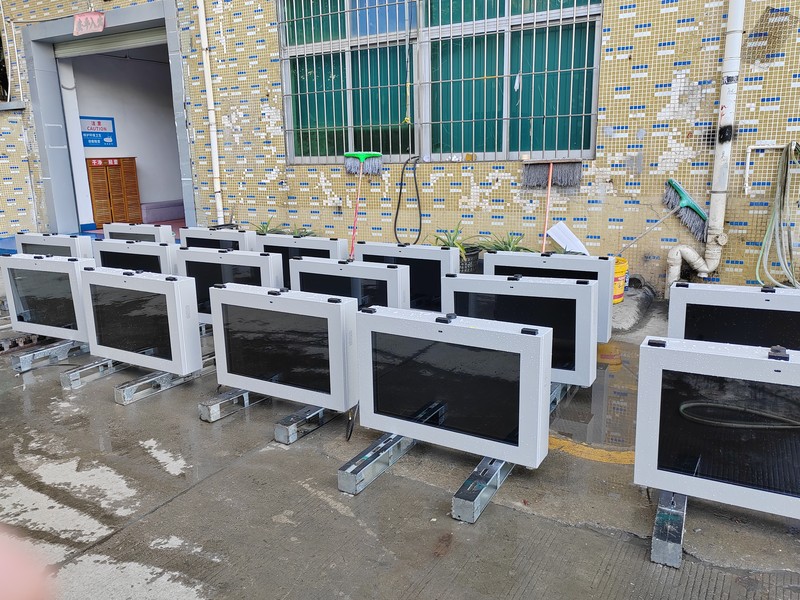
Producing one sample can confirm the general appearance and function of a display. Batch production introduces a different requirement: each completed unit must remain consistent with the approved configuration.
During production, the team checks the placement of the LCD panel within the cabinet opening, the alignment of the rear cover, the position of ventilation areas and the fit of external components. When several screens will be installed in the same store or building, even small visual differences can become noticeable.
Cabinet color and surface finish are also reviewed as part of the batch. A consistent finish helps the displays appear as one coordinated installation rather than a collection of unrelated screens. This becomes particularly important for retail chains, branded interiors and multi-location projects.
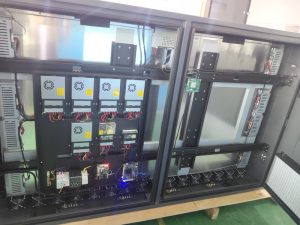
The enclosure provides the structure that holds the screen, media player, power components and ventilation system together. Before the cabinet is closed, technicians can inspect wiring routes, fastening points and the placement of internal hardware.
Organized internal assembly helps with both production inspection and future maintenance. Cables should not interfere with ventilation or place unnecessary pressure on connectors. Access panels should open correctly, and serviceable components should remain reachable after the display is installed.
The exact internal configuration can vary according to the project. A standalone advertising screen may only require local media playback, while a networked project may need remote content management, Wi-Fi or Ethernet. These options should be confirmed in the order rather than assumed from the external appearance.
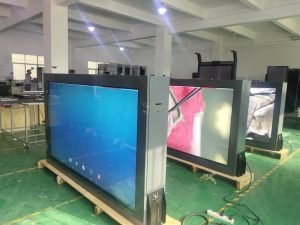
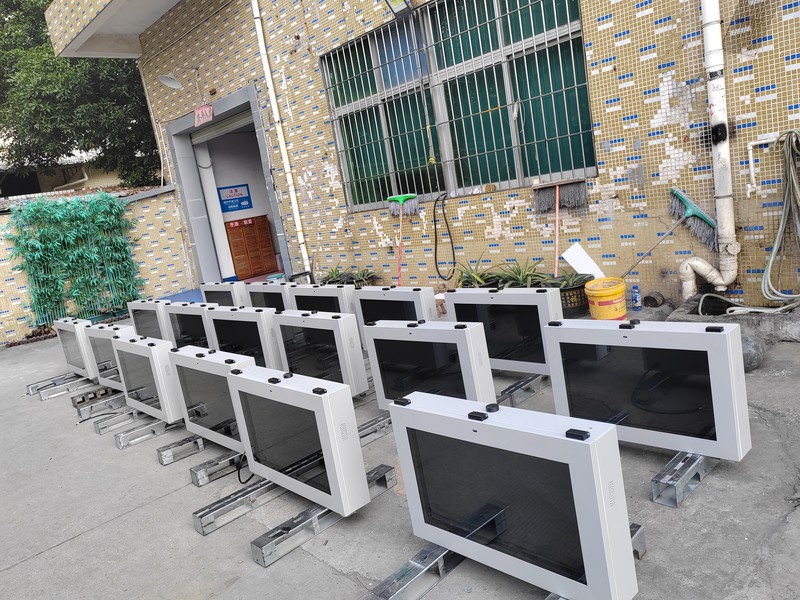
Once assembly reaches the operating stage, multiple units can be powered on for screen and system checks. This process gives the production team an opportunity to compare startup behavior, image positioning and visible display performance across the batch.
Testing several units together is useful because a single working screen does not confirm consistency throughout an order. Technicians can identify differences in configuration, playback behavior or screen alignment before the equipment reaches the packing stage.
Content used during factory testing may be different from the final advertising material. Its purpose is to confirm operation and make visible comparison easier. The purchaser should separately prepare final images and videos in the correct horizontal resolution and aspect ratio.
Good hardware cannot compensate for content that is difficult to read. A 32-inch landscape display performs best when each frame has a clear purpose and a controlled amount of information.
For a menu or service screen, the most important item should remain visually dominant. For retail advertising, a strong product image, short headline and simple call to action are often more effective than a crowded design. Directional content should use large text and recognizable symbols that can be understood quickly.
The viewing distance should guide font size and layout. Content intended for a customer standing close to a counter can include more detail than a message viewed while walking through a corridor. Buyers planning a multi-location rollout should prepare a consistent content template before installation.
A wall-mounted display needs a suitable support surface and a correctly selected bracket. The installer should confirm the wall material, loading conditions and fixing method according to local requirements. The installation should not depend on decorative wall panels alone if they cannot safely support the equipment.
Power and network cable routes also need to be planned. Concealed cabling generally produces a cleaner result, but it may require preparation before the displays arrive. If cables remain visible, protective routing should be used so that connections are not pulled or damaged during daily operation.
Maintenance access is another practical consideration. The installation should leave enough room to remove the display, open its service area or reach required connections. Mounting a screen tightly between fixed structures may look neat initially but can make later servicing unnecessarily difficult.
Before batch production, purchasers should confirm the bracket, mounting orientation, external connections and cable exit position. These details can influence cabinet preparation and packing accessories.
A batch of 32-inch wall mounted digital signage may be installed at one large facility or divided among several locations. In either case, consistent preparation can reduce the amount of work required on site.
If operating settings, content methods or network requirements differ between units, installers may need to configure every display separately. Clear project documentation allows the factory and purchaser to agree on which settings should be standardized before shipment.
For a retail chain, this may include startup behavior, content playback mode and screen orientation. For an office or public facility, it may include network access, scheduled operation or a specific application. The objective is not to add every available function, but to prepare the functions that the project will actually use.
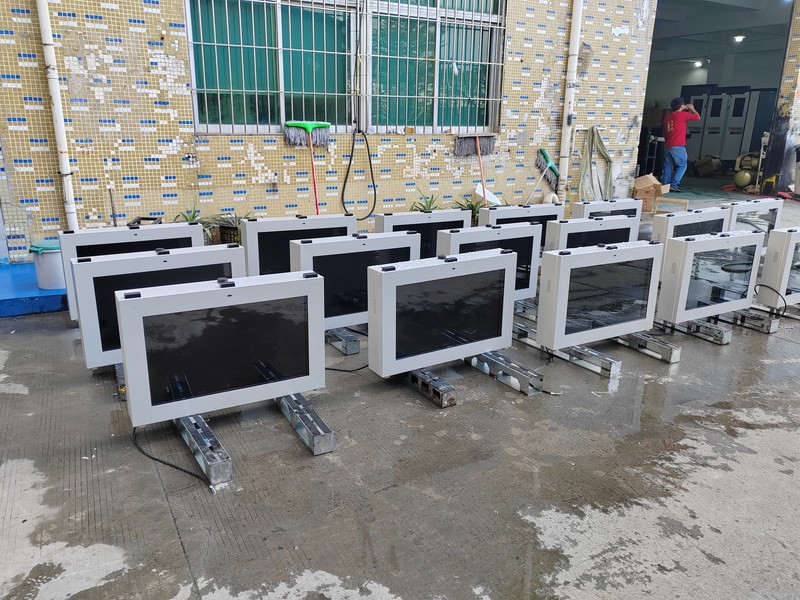
After functional testing, the finished units require an external inspection. The visible screen area, cabinet surface, corners, ventilation openings and mounting points can be checked before protective packing is applied.
Wall-mounted displays need packaging that protects both the LCD surface and cabinet during handling. Accessories should be identified and packed in a way that makes them easy to confirm after delivery. For a batch project, labeling cartons by installation location or unit group can simplify warehouse handling and site distribution.
Buyers should provide any special labeling, pallet or shipping requirements before packing begins. Last-minute changes after the cartons are sealed can create unnecessary handling and increase the risk of mixing accessories.
Before selecting a configuration, the purchasing team should provide the expected quantity, installation environment, wall type, viewing distance and operating schedule. The required content update method and network connection should also be confirmed.
If the screens will be installed close to windows, in bright interiors or in protected outdoor areas, the lighting conditions should be explained clearly. A standard indoor screen and a high-brightness commercial configuration serve different environments, even when their external dimensions appear similar.
Other useful information includes the required cabinet color, bracket type, input connections, operating system and delivery schedule. Project photographs or simple installation drawings can help the manufacturer understand constraints that may not be obvious from a written inquiry.
ZXT LCD supports project discussions from cabinet selection through assembly, inspection and packing. For buyers comparing different sizes or installation formats, our outdoor LCD advertising display range provides additional options for wall-mounted, floor-standing and project-specific installations.
The purpose of a production review is not to replace the final specification sheet. It gives the purchaser a clearer view of how the equipment is handled before delivery and which details should be confirmed before manufacturing begins.
For a new 32-inch wall mounted digital signage project, send the required quantity, installation photographs, operating environment, content method and expected delivery schedule. The ZXT LCD team can review these details and recommend a configuration suited to the actual application.