Phone:
+8618098949445
Physical address:
604, Building 1, Sanyu Industrial Park, Xinwei Fourth Industrial Zone, Xinzhuang Community, Majan Street, Guangming District, Shenzhen

Phone:
+8618098949445
Physical address:
604, Building 1, Sanyu Industrial Park, Xinwei Fourth Industrial Zone, Xinzhuang Community, Majan Street, Guangming District, Shenzhen

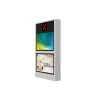
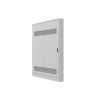
75-Inch Traffic LCD Digital Signage Display:
Specialized outdoor information system designed for vehicle entrances, access-control lanes, parking areas and logistics facilities.
Multi-Zone Traffic Information Layout:
Combines lane-status indicators, central display area and supporting message panels for clear driver communication.
Priority-Based Access Guidance:
Displays open/closed status, directional instructions, safety notices and operational messages in an easy-to-understand hierarchy.
Smart Traffic Content Management:
Supports controlled publishing, operational updates, emergency messages and separate permissions for traffic commands and advertising content.
High-Visibility Outdoor Performance:
Designed for daylight readability with brightness adjustment, durable enclosure and reliable outdoor operation.
Commercial & Public Access Applications:
Suitable for parking facilities, industrial entrances, campuses, event access points and controlled vehicle areas.
Custom Integration Options:
Supports customized cabinet design, screen arrangement, control interfaces and connection with access-management systems.
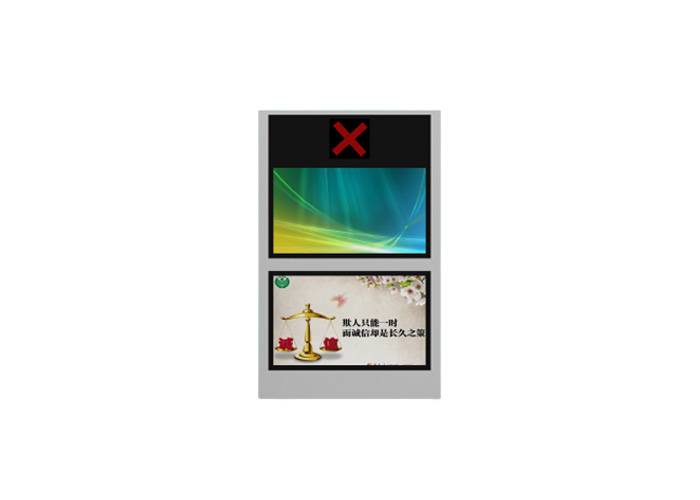
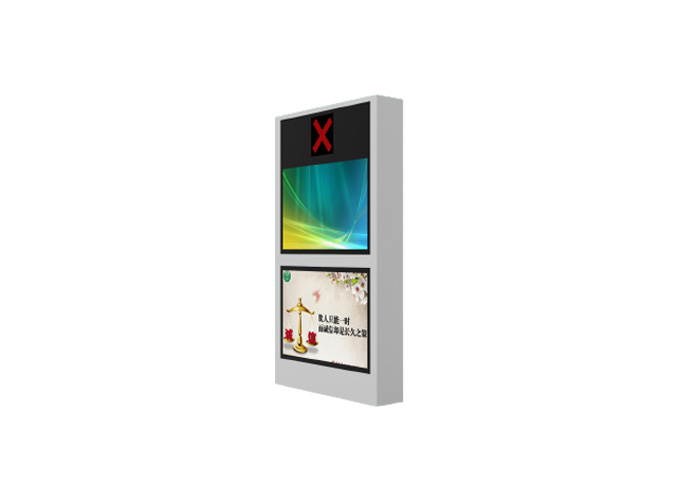
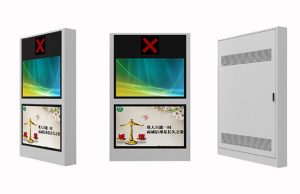
This 75-inch unit combines a lane-status indicator, central landscape screen and supporting message panel. The three information zones make it suitable for vehicle entrances, controlled-access roads, logistics facilities, parking areas and event arrival lanes.
Traffic LCD Digital Signage must communicate in a stricter order than ordinary commercial media. Drivers need to recognise whether a lane is open, understand the next instruction and then absorb any supporting message. The physical layout of this product already supports that hierarchy.
The upper symbol should carry the simplest instruction: open, closed, stop, proceed or direction change. It needs strong contrast and a consistent meaning across the site. A red X should never be reused as a decorative graphic because drivers learn to treat it as an operational command.
The centre screen can explain the next action. It may show vehicle category, access requirements, queue allocation or a large directional arrow. The lower panel can carry supporting information such as safety reminders, visitor instructions, opening times or a restrained commercial message.
This order reduces cognitive load. A driver can recognise the status first, read the action second and use the supporting detail only when time permits. It is more effective than presenting three unrelated advertisements in a single vertical stack.
A message for a driver moving at low speed still has only a few seconds to work. Use large type, short phrases and familiar symbols. Avoid QR codes where stopping would be unsafe. Detailed terms or maps should be provided at a separate parking or pedestrian information point.
The system should link to operational data where appropriate. Lane availability, site capacity or access restrictions may be updated by authorised staff or a connected control system. Manual control needs safeguards so that an advertising user cannot accidentally change a traffic command.
Emergency content should override normal playlists immediately. The screen can then show closure instructions, an alternative entrance or a request to wait. When the event ends, the operator should be able to restore scheduled content without visiting the cabinet.
Shopping centres, attractions, office developments and parking operators may use the lower message area for nearby businesses or on-site promotions. This can create media value without weakening the primary guidance function.
Commercial content should follow site rules:
Traffic LCD Digital Signage earns trust through consistency. If operational information disappears too often, drivers will stop relying on it.
The screen should be evaluated from the driver’s approach, not from directly in front of the cabinet. Installation drawings need lane width, expected vehicle speed, decision distance and potential obstruction by trucks or landscaping.
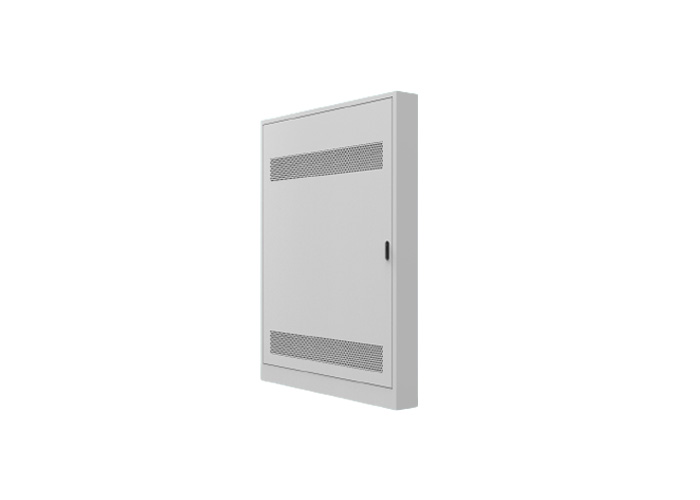
The vertical layout concentrates several information functions in a narrow footprint, which is useful at gatehouses and divided lanes. The foundation, wind loading and impact protection can be engineered for the location, with bollards added where vehicles approach the terminal.
Daylight reflections and headlight glare should be reviewed. Automatic brightness adjustment can keep the symbol and text visible without creating excessive output at night.
Coordinated display zones:
The status symbol, centre screen and lower panel can operate through coordinated control while retaining separate content functions.
Protected lane-status control:
Traffic commands can use separate permissions from advertising playlists, preventing routine campaign updates from changing operational instructions.
Safe fallback content:
During a network interruption, the system can retain essential instructions or adopt a predefined status instead of showing an ambiguous blank area.
Custom cabinet options:
Colour, branding, screen arrangement and control interfaces can be adapted to the access-control environment.
This 75-inch display becomes more differentiated when sold for structured access communication instead of generic outdoor advertising. With a clear command hierarchy, safe content rules and site-specific engineering, Traffic LCD Digital Signage can move vehicles more efficiently while preserving a controlled secondary channel for public or commercial messages.
Tell us your required screen size, quantity and application. Our team will reply within 24 hours.