Phone:
+8618098949445
Physical address:
604, Building 1, Sanyu Industrial Park, Xinwei Fourth Industrial Zone, Xinzhuang Community, Majan Street, Guangming District, Shenzhen

Phone:
+8618098949445
Physical address:
604, Building 1, Sanyu Industrial Park, Xinwei Fourth Industrial Zone, Xinzhuang Community, Majan Street, Guangming District, Shenzhen

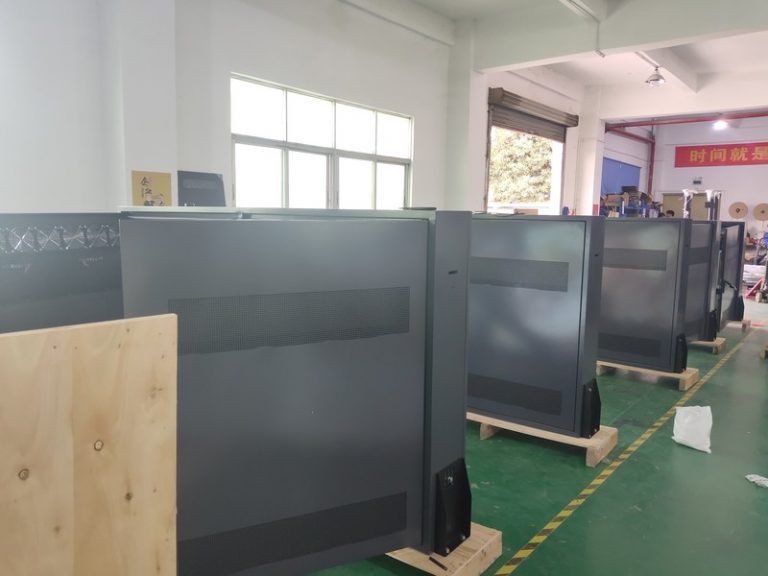
In commercial outdoor display projects, a familiar scenario plays out repeatedly: hardware specifications appear impressive on paper and pricing is attractive, yet once deployed, problems surface incessantly. Displays are legible by day but blindingly glaring at night; screens throttle brightness under summer heat; and in unattended public spaces, chassis service doors are tampered with.
These failures rarely stem from a single low specification, but rather from failing to ask the right engineering questions during selection. Outdoor physical environments are rigorous: northern sub-zero freezes, blistering southern solar radiation, torrential rain, windborne dust, and public vandalism test hardware far more severely than indoor spaces.
Traditional selection approaches compare panel brands, nit numbers, sheet metal gauge, and IP ratings. While important, attractive specifications do not automatically guarantee sound field performance.
Outdoor ambient lighting shifts dynamically: intense midday sun, low-angle dusk glare, overcast drizzle, and dark nights demand vastly different display luminance. If a display operates at a fixed brightness setting, it appears washed out at noon and painfully glaring at night—compromising visual aesthetics while wasting power. Focus on whether the display incorporates intelligent ambient optical sensing for smooth, automated brightness transitions.
Key questions to ask: Does the unit incorporate ambient optical sensors? Is brightness modulation smooth or jarringly stepped? Does the display maintain natural color saturation and contrast at peak brightness without washing out? These capabilities should be verified through live demonstrations rather than datasheets alone.
Many outdoor displays malfunction during hot summer months because internal cooling architectures cannot handle the combined heat of high-brightness backlights and solar radiation. As internal temperatures spike, system protection circuits automatically throttle brightness—dimming the screen right when intense daylight demands peak power.
Examine the cooling architecture: Is it natural convection, variable-speed fan cooling, or active air conditioning? How does it perform under continuous high-temperature baking, and at what temperature threshold does protection trigger? Furthermore, cooling and waterproofing require balance: sealing an enclosure too tightly traps heat, while overly open vents invite rain and dust. Superior engineering balances both seamlessly.
Installation site planning is equally vital: avoiding unshaded perpendicular solar angles and preserving generous convective airflow around vents is far more effective than retrofitting cooling hardware later.
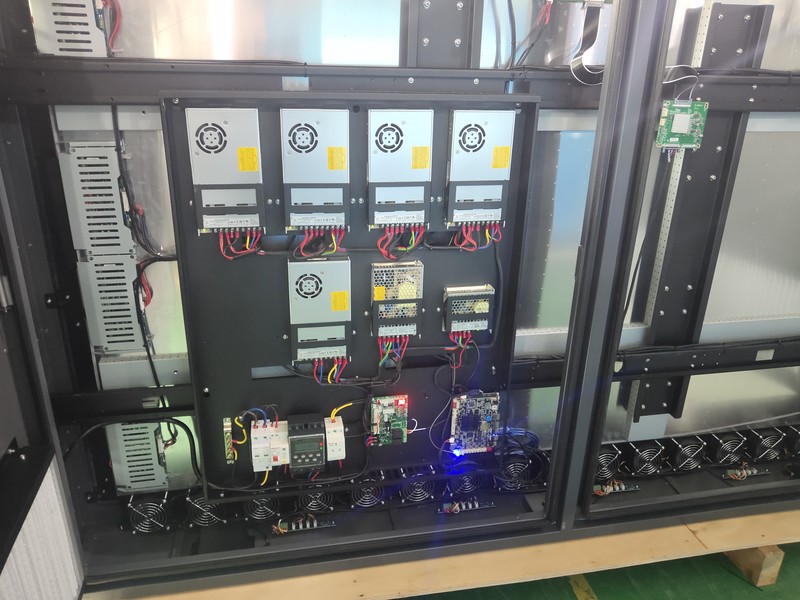
Displays installed across public parks, commercial districts, bus shelters, and streets face genuine risks of vandalism and tampering. Beyond the front glass, internal power supplies, motherboards, and storage drives represent targets.
Anti-vandal engineering requires a multi-layered approach: heavy-gauge chassis construction, industrial multi-point cam locks on service doors, internal chassis intrusion sensors, and automated alarm alerts synchronized with cloud CMS software. In unattended public locations, robust physical security is essential.
Different geographic regions present distinct environmental obstacles:
Coastal zones feature heavy salt spray, demanding marine-grade anti-corrosion powder coatings and sealed internal electronics. Sub-zero northern climates require cold-boot validation and internal heating elements. Searing southern regions demand high-capacity thermal cooling. Humid, rainy regions require certified IP waterproofing and sealed cable drip loops.
Before procuring hardware, document your site conditions: local temperature extremes, direct solar exposure, humidity patterns, coastal proximity, and foot-traffic density. Provide this data to suppliers to guide appropriate hardware recommendations rather than defaulting to the highest-priced model.
Datasheet figures are measured under ideal laboratory conditions; real-world field installations provide far more dependable insight.
Request reference deployments operating continuously for over twelve months in matching climates and scenarios. Where feasible, speak with facility managers: Did screens experience thermal dimming in summer? Did moisture ingress occur during rainy seasons? How responsive was technical support? Has screen brightness degraded after a year?
Verify enterprise credentials, patents, and project case histories through public regulatory channels. Verifiable track records build authentic confidence far better than abstract marketing slogans.
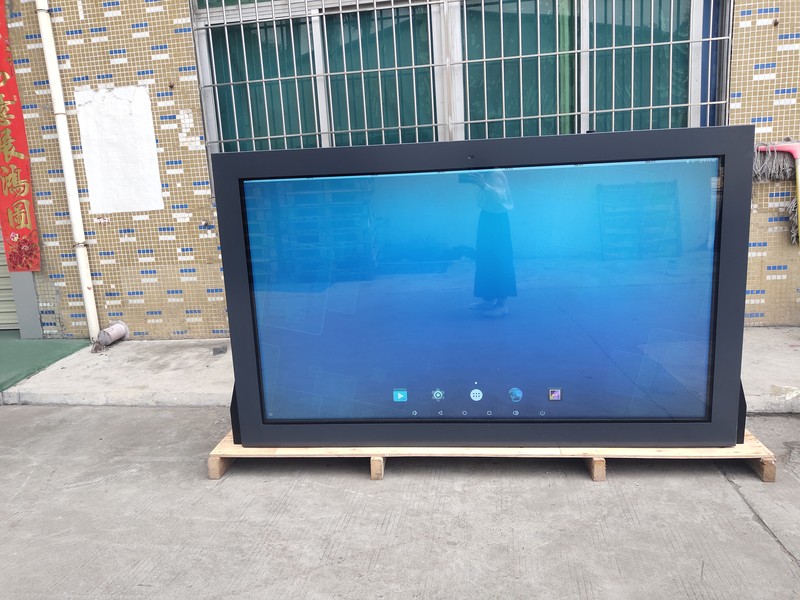
Outdoor displays feature multi-year operational lifecycles; servicing outdoor units requires technician dispatches, traffic management, and boom lifts. Low-cost hardware prone to failure quickly becomes vastly more expensive over time.
Calculate comprehensive lifecycle costs: purchase price, civil foundation installation, electrical utility consumption, routine maintenance, replacement wear parts, and lost advertising revenue during downtime. Establish warranty terms, component coverage, service response times, and spare-parts availability roadmaps.
Is higher luminance always better for outdoor digital signage? No. Luminance must match ambient conditions and adapt automatically. Operating at maximum brightness continuously wastes power, accelerates backlight aging, and causes severe nighttime glare.
Can indoor advertising displays be modified for outdoor use? It is strongly advised against. Outdoor displays require specialized weatherproofing, high brightness, active cooling, and wide-temperature components; indoor screens deployed outdoors experience rapid failure.
How can buyers evaluate whether a supplier is trustworthy? Inspect verified reference deployments in matching climates, verify testing credentials behind specifications, review clear contractual warranty terms, and speak directly with existing clients.
Do outdoor displays require physical anti-vandal security? In unattended public areas with dense foot traffic, anti-vandal engineering (tamper-proof fasteners, industrial cam locks, intrusion alarms) is essential to safeguard internal electronics.
Selecting outdoor digital signage is not about choosing the highest specifications on paper, but selecting the hardware best adapted to your operating environment. Analyzing site conditions, verifying automated dimming, cooling, and security, reviewing verified client references, and evaluating Total Cost of Ownership ensures a reliable, high-return deployment.
ZXTLCD specializes in commercial-grade LCD stretched bar displays designed for retail shelving, service counters, pedestrian corridors, and showcase window interiors for indoor and sheltered commercial spaces. If your project involves specialized elongated displays, share your installation dimensions, site conditions, and unit requirements with us. Official website: www.outdoorlcddisplays.com/” target=”_blank” rel=”noopener”>www.outdoorlcddisplays.com
If you are sourcing high-reliability outdoor digital signage hardware, consider these commercial specifications:
ZXTLCD provides comprehensive ODM/OEM manufacturing for outdoor displays—including sunlight-readable brightness up to 4000 nits, IP65/IP66 weatherproof enclosures, intelligent temperature management, and integrated remote CMS.