Phone:
+8618098949445
Physical address:
604, Building 1, Sanyu Industrial Park, Xinwei Fourth Industrial Zone, Xinzhuang Community, Majan Street, Guangming District, Shenzhen

Phone:
+8618098949445
Physical address:
604, Building 1, Sanyu Industrial Park, Xinwei Fourth Industrial Zone, Xinzhuang Community, Majan Street, Guangming District, Shenzhen

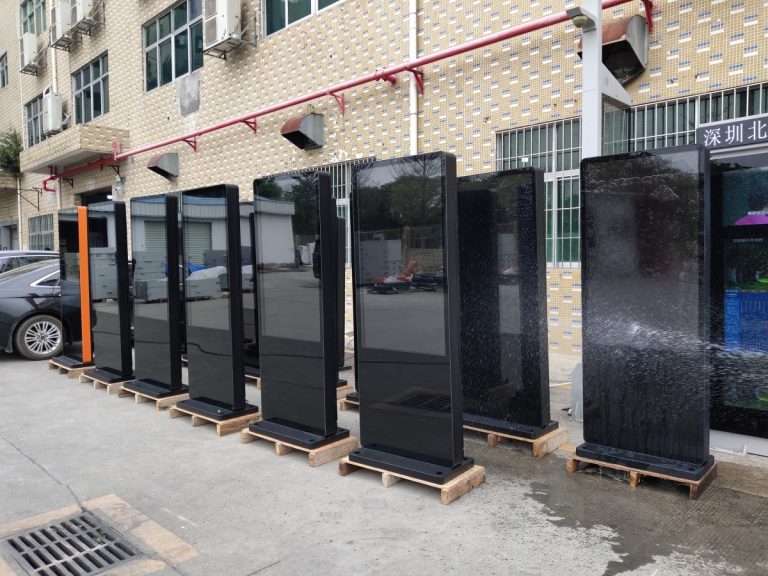
After investing in outdoor digital signage kiosks, the greatest pitfall is not poor equipment performance, but placing the hardware in the wrong physical location. Tucked into a shaded back-alley corner, nobody sees it; positioned facing direct glare without anti-reflective treatment, it reflects like a mirror; placed at a hurried transit intersection with overly dense, complicated content, passersby have no time to read it.
Therefore, before comparing raw hardware specifications, determine where the kiosk will be placed, who will view it, and what operational challenge it is meant to solve. Below is a practical guide covering six common deployment scenarios along with key hardware configuration insights.
This is the most prevalent venue for outdoor digital signage. Positioned at retail street portals, plaza borders, and corridor turns, pedestrian foot traffic is heavy but dwell time is brief. Promotional marketing moves at a rapid pace: weekend sales, holiday promotions, and tenant openings shift every few days.
This environment prioritizes rapid content updates. Traditional posters require design, proofing, printing, and manual posting, frequently lagging behind sales campaigns. Stretched and outdoor screens update via cloud CMS software, switching scheduled campaigns on time and unpublishing expired materials automatically to prevent outdated notices.
Content design must match pedestrian walking tempo. Passersby glance at the screen for mere seconds; each slide should focus on a single message with large, high-contrast typography rather than duplicating dense print posters. Dayparting can be programmed: coffee and breakfast specials in the morning, dining and cinema promos in the evening, and family activities on weekends.
On the hardware side, focus on luminance and ingress protection. Pedestrian streets represent true outdoor environments; bright daylight requires high luminance (typically 2,000–3,000 nits) paired with automated ambient dimming to prevent nocturnal glare.
At bus terminals, railway stations, ferry piers, and transit portals, information accuracy takes precedence over aesthetic flair. Departures, platform directions, and delay notices must be completely reliable, as a single error can misdirect travelers.
Here, displays serve dual roles: first, broadcasting essential public transit data; second, displaying commercial advertisements during idle intervals. Content priority rules must be strictly established: when transit alerts change, public notices must take immediate precedence while commercial ads yield. This requires software protocol support verified with suppliers during procurement.
Transit hubs operate over long daily duty cycles amidst heavy public crowds, making hardware reliability and rapid service response paramount. For networks with multiple endpoints, remote telemetry monitoring to catch offline units proactively is vastly superior to relying on manual on-site inspections.
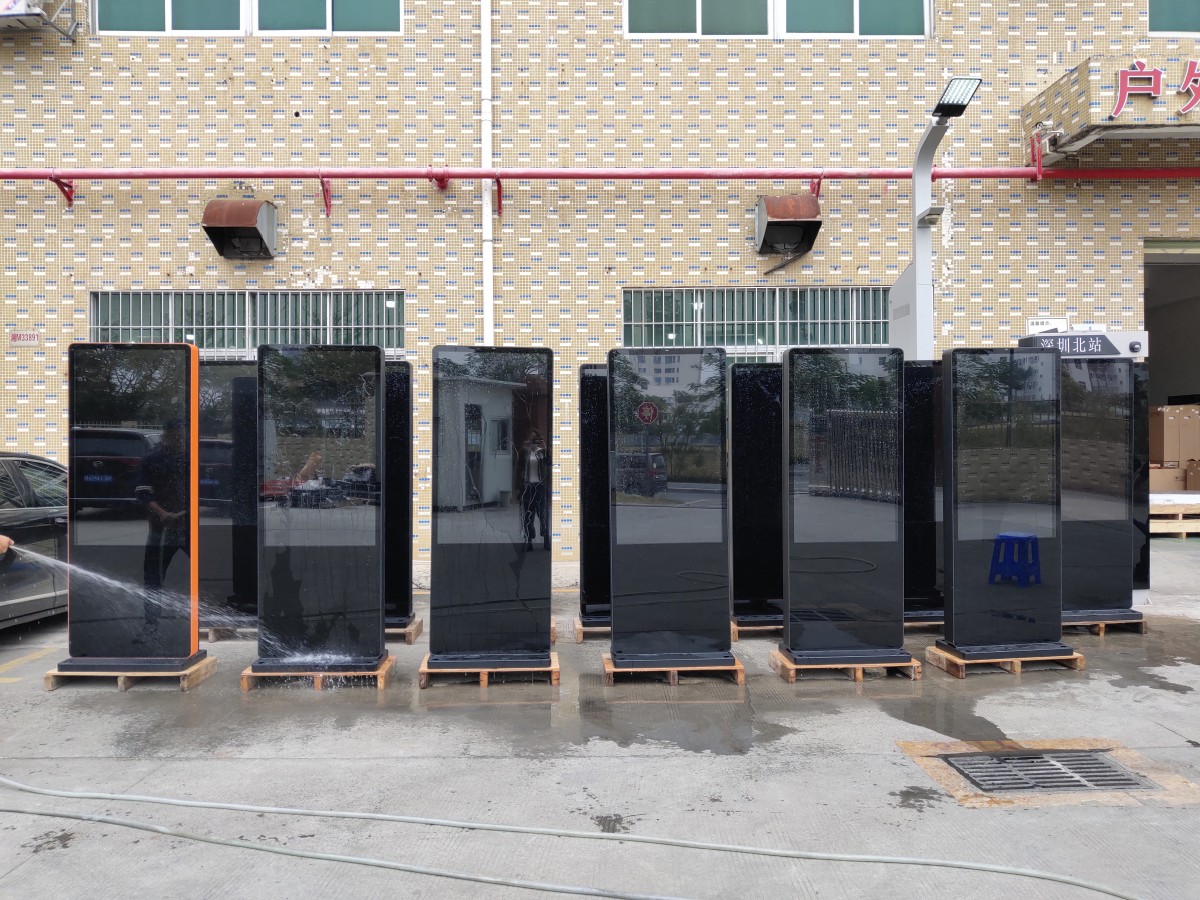
Parking area displays are typically deployed to show entrance clearance, fee schedules, space availability, and directional safety alerts. These environments present distinctive challenges: dampness, heavy vehicle exhaust dust, and potential vehicle bumper impacts.
Consequently, installation design and enclosure protection demand close scrutiny. Kiosks should be mounted on elevated concrete plinths to prevent water immersion during localized flooding; positions should be isolated from vehicular turning radiuses to prevent scrapes; and cabling conduits must feature watertight drip loops. Screen positioning must align with drivers’ natural sightlines with bold typography legible at a glance without vehicle stops.
In these environments, displays primarily provide public utility: trail wayfinding, scenic highlights, operating hours, weather forecasts, safety guidelines, and community notices (e.g., waste sorting guidelines or maintenance utility notices).
Content credibility is more important than flashy marketing. Visitors and residents consult these screens for reliable guidance, requiring disciplined content auditing and timely updates to prevent expired announcements from lingering.
Hardware-wise, parks and scenic grounds frequently lack readily available AC power or wired data drops. In such locations, battery-powered or solar-assisted kiosks offer compelling utility, evaluated against specific runtime ratings. Where self-service wayfinding is desired, interactive touch screens can be specified, taking into account sunlight touch performance.
Sub-zero northern winters and hot, humid southern rainy seasons present vastly different engineering challenges. In freezing temperatures, displays risk cold-boot failures; broad temperature swings generate internal condensation; and intense summer heat forces uncooled panels into thermal throttling.
In extreme climates, internal climate control must be prioritized. Select models equipped with built-in intelligent temperature management systems (heating elements, forced-air convection, or precision air conditioning) that maintain stable internal temperatures and eliminate condensation. Hardware configurations should reflect local historical temperature extremes, direct solar exposure, and daily operational hours. Share site climate data and mounting orientations with suppliers to evaluate thermal configurations rather than relying on generic datasheet temperature ranges.
Brand pop-ups, outdoor exhibitions, street markets, and grand openings involve constantly shifting event venues where running AC electrical lines is difficult. These scenarios demand maximum mobility: roll into place, power on instantly, and pack up without site traces when the event concludes.
Battery-powered mobile kiosks excel in these scenarios. Inquire about authentic runtime under target brightness levels, planning for spare battery modules or mid-day charging if events span long days. Furthermore, ensure caster wheels feature robust foot locks, remaining vigilant during gusty weather.
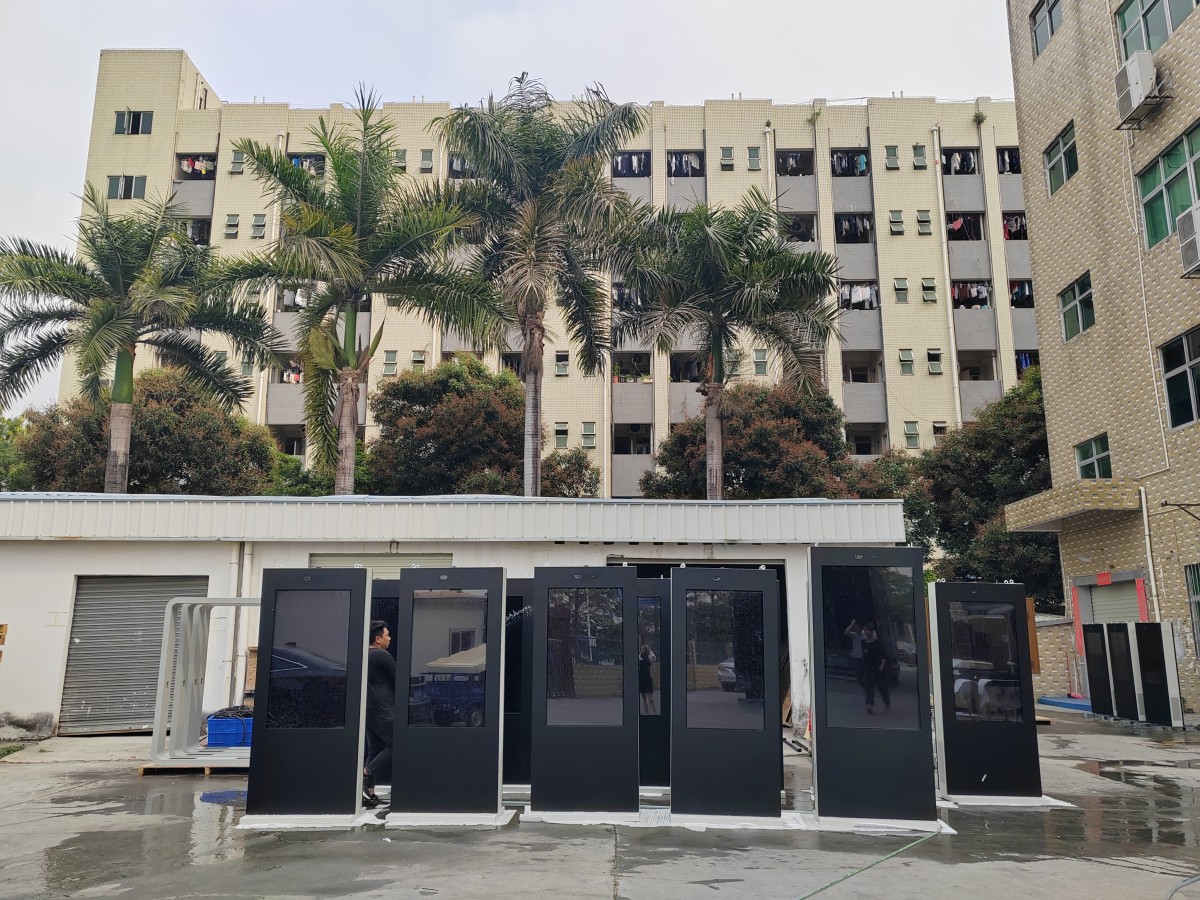
Regardless of placement, observe these universal operational fundamentals:
Distinguish Full Outdoor from Sheltered Semi-Outdoor: Sheltered canopies require lower brightness and weatherproofing specifications, avoiding unnecessary capital expenditure, while standard indoor displays should never be deployed in genuine outdoor exposure.
Establish Clear Content Ownership: Many outdoor screens fall into disrepair because nobody is assigned to update media playlists. Designate responsible personnel for both content curation and hardware inspections before installation.
Ensure Structural Safety and Municipal Compliance: Outdoor installations involve foundation anchors, wind loading, lightning grounding, and electrical safety, which must be executed by certified contractors. Inquire about local municipal outdoor advertising permits and zoning codes prior to public deployment.
Can an outdoor digital display balance commercial ads with public announcements? Yes, by establishing software playlist scheduling priorities that allow critical civic alerts to override commercial media instantly when triggered.
Can outdoor screens be installed in remote parks lacking electrical power? Yes. Battery-powered and solar-assisted kiosks are available, evaluated based on daily sunshine hours, target brightness, and daily operational runtimes.
Should a multi-site project deploy identical hardware across all locations? Not necessarily. Deploy high-brightness freestanding kiosks at open portals, sheltered models under breezeways, and interactive touch kiosks at inquiry desks, unified under a single centralized cloud CMS.
How should operators match scenarios to hardware configurations? First define environmental exposure, climate extremes, operating duty cycles, power availability, and network infrastructure, then consult suppliers for customized technical proposals.
The operational success of an outdoor LCD advertising display depends equally on two factors: selecting quality hardware, and deploying it in the right location with tailored content and disciplined maintenance. Defining your application scenario first ensures a cost-effective, dependable deployment.
ZXTLCD specializes in the engineering and manufacturing of outdoor commercial LCD displays, offering freestanding pedestals, wall-mounted kiosks, interactive touch terminals, battery-powered mobile units, and solar-assisted models, complete with intelligent internal climate control. If your project requires outdoor visual displays, share your deployment scenario, unit count, and climate parameters with our engineering team. Official website: www.outdoorlcddisplays.com
If you are sourcing high-reliability outdoor digital signage hardware, consider these commercial specifications:
ZXTLCD provides comprehensive ODM/OEM manufacturing for outdoor displays—including sunlight-readable brightness up to 4000 nits, IP65/IP66 weatherproof enclosures, intelligent temperature management, and integrated remote CMS.