Phone:
+8618098949445
Physical address:
604, Building 1, Sanyu Industrial Park, Xinwei Fourth Industrial Zone, Xinzhuang Community, Majan Street, Guangming District, Shenzhen

Phone:
+8618098949445
Physical address:
604, Building 1, Sanyu Industrial Park, Xinwei Fourth Industrial Zone, Xinzhuang Community, Majan Street, Guangming District, Shenzhen

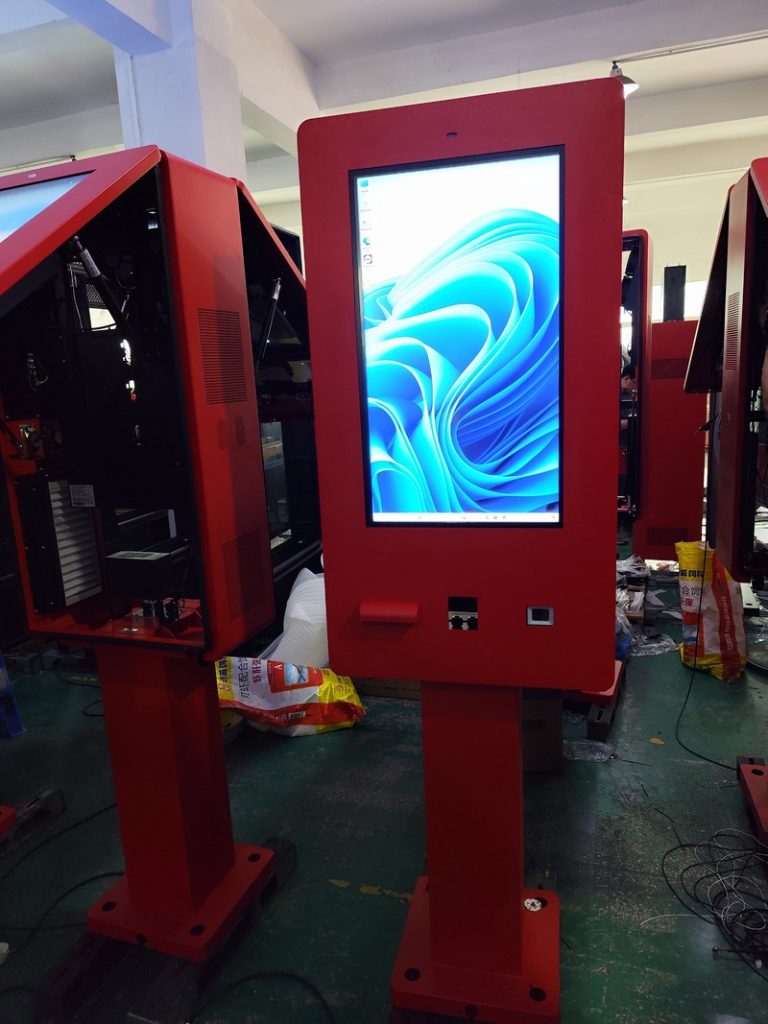
Ordering equipment outside a restaurant has to do more than show attractive food photography. It must help customers understand choices quickly, keep the service message visible from the approach direction and fit into a lane or entrance where every centimetre matters. ZXT LCD developed this 32-inch double-sided unit around those practical conditions. It is a compact outdoor digital menu board that can present content on both faces instead of leaving the rear of the cabinet unused.
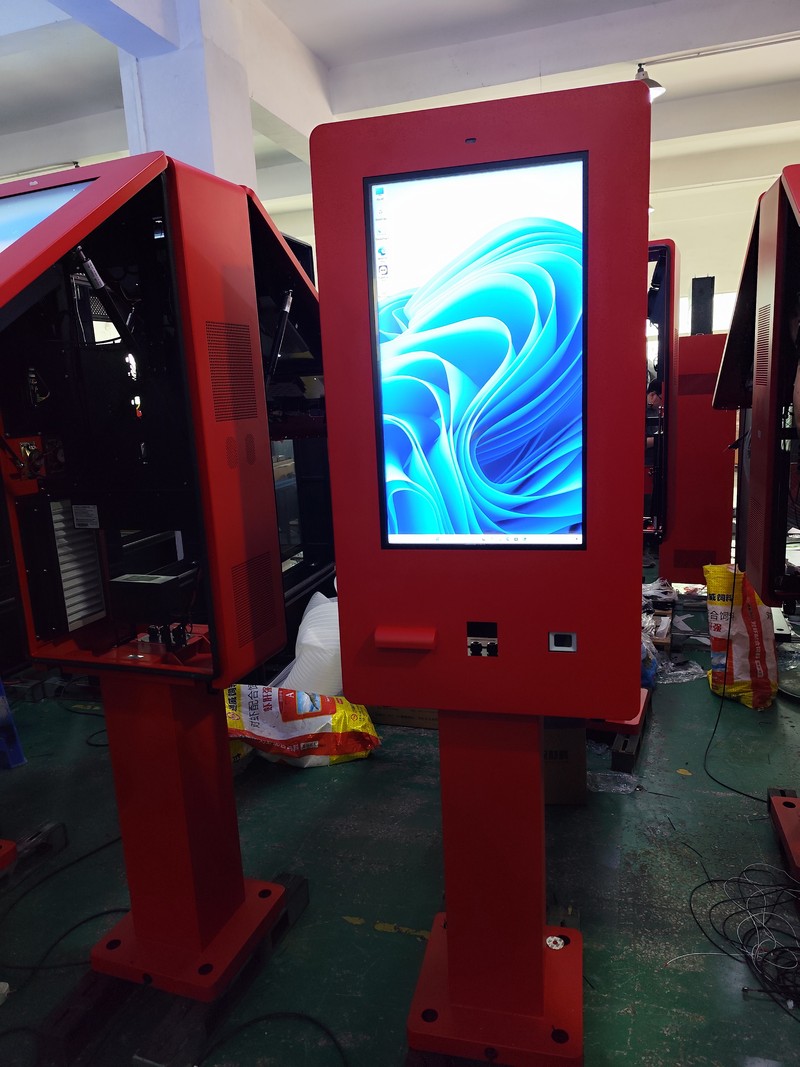
The two-screen arrangement is particularly useful where customers and staff approach from different directions. One face can guide the arriving customer through menu categories and current offers, while the opposite face can repeat the main promotion, show collection instructions or support another part of the queue. The final content plan remains flexible because both screens can be configured for matching or separately scheduled material according to the confirmed media system.
A conventional single-face menu board assumes that every viewer stands in one fixed position. Real restaurant sites are often less orderly. Customers may walk around the display, vehicles may enter from an angle, and collection staff may need information on the service side. A double-sided cabinet creates two useful communication surfaces without requiring two separate foundations and two unrelated equipment housings.
The 32-inch format keeps the structure manageable for compact restaurant entrances, pedestrian ordering zones, outdoor counters and pickup areas. It is not intended to replace a large multi-panel drive-through menu where dozens of products must remain visible at once. Its strength is focused communication: selected meals, recommended combinations, ordering steps, promotional pricing or a short rotating sequence that can be understood quickly.
The first screen may introduce the current campaign before the customer reaches the counter. The second can reinforce a call to order, direct customers toward payment or display collection guidance. For a site with bidirectional foot traffic, both sides may carry the same brand message. This is a content decision rather than a fixed hardware limitation, and it should be discussed before the player and network configuration are confirmed.
Small type and crowded price tables reduce the value of a compact screen. The content should be built around viewing distance and decision time. A strong product image, a concise product name and a clearly separated price are normally more effective than transferring an entire printed menu onto one digital canvas.
Daypart scheduling can help the same display support breakfast, lunch, afternoon and evening offers without replacing printed graphics. Limited-time promotions can be inserted into the playlist, and sold-out items can be removed when the selected content management method supports remote updates. The hardware should be matched with the customer’s preferred workflow instead of assuming that every project needs the same software.
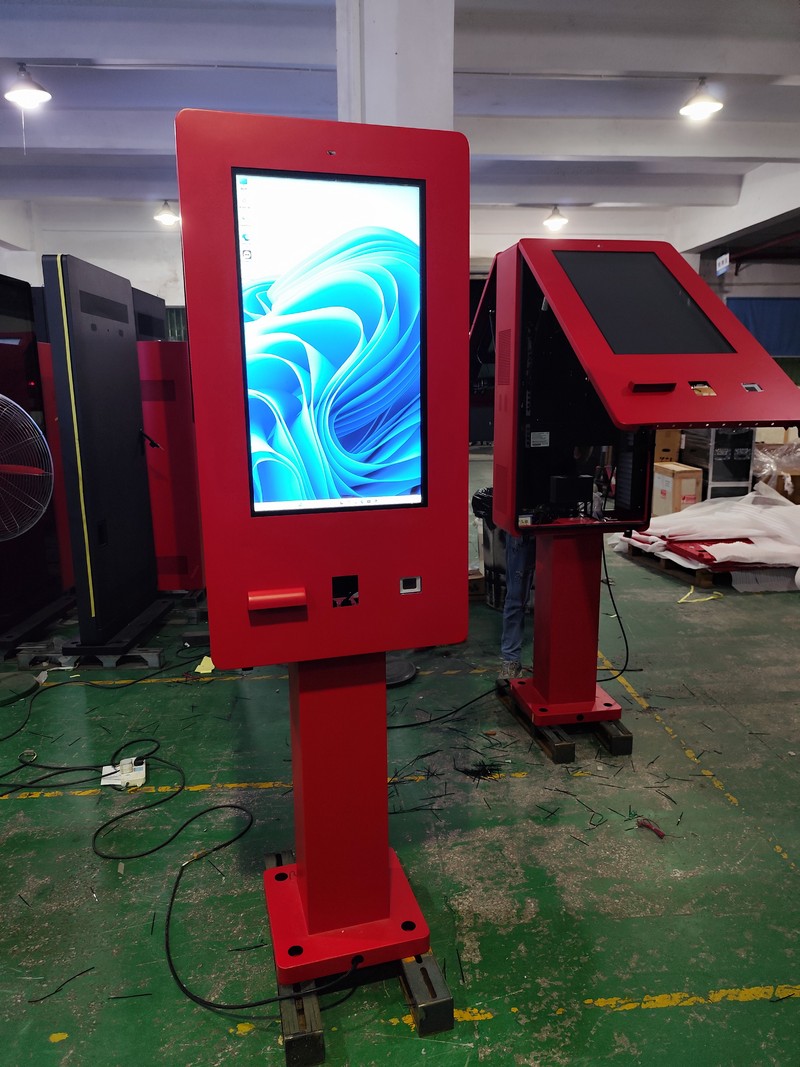
A two-screen cabinet introduces details that are easy to overlook in a drawing. The panels must align with openings on opposite faces, internal cables need protected routes, access doors must remain serviceable, and the thermal layout has to consider heat from both display assemblies. ZXT LCD reviews these relationships during enclosure preparation and assembly.
The production team checks the metalwork, screen position, door fit, internal mounting points and external finish before the cabinet is closed. If the project includes a microphone, camera, printer, scanner, touch layer or other ordering component, its opening and service route must be confirmed before fabrication. Optional equipment should never be assumed from the product name alone.
“Outdoor” is not one universal environment. A unit beneath a restaurant canopy faces different sunlight, rain and temperature conditions from a kiosk beside an exposed vehicle lane. The buyer should provide installation photographs, orientation, local temperature range, expected operating hours and cleaning routine. These details guide decisions about screen brightness, glass, sealing, cooling and corrosion protection.
The base or mounting arrangement also needs site-specific review. The finished equipment should be anchored according to the foundation and local engineering requirements. Power and network cables need a protected entry route, and service access must remain available after installation.
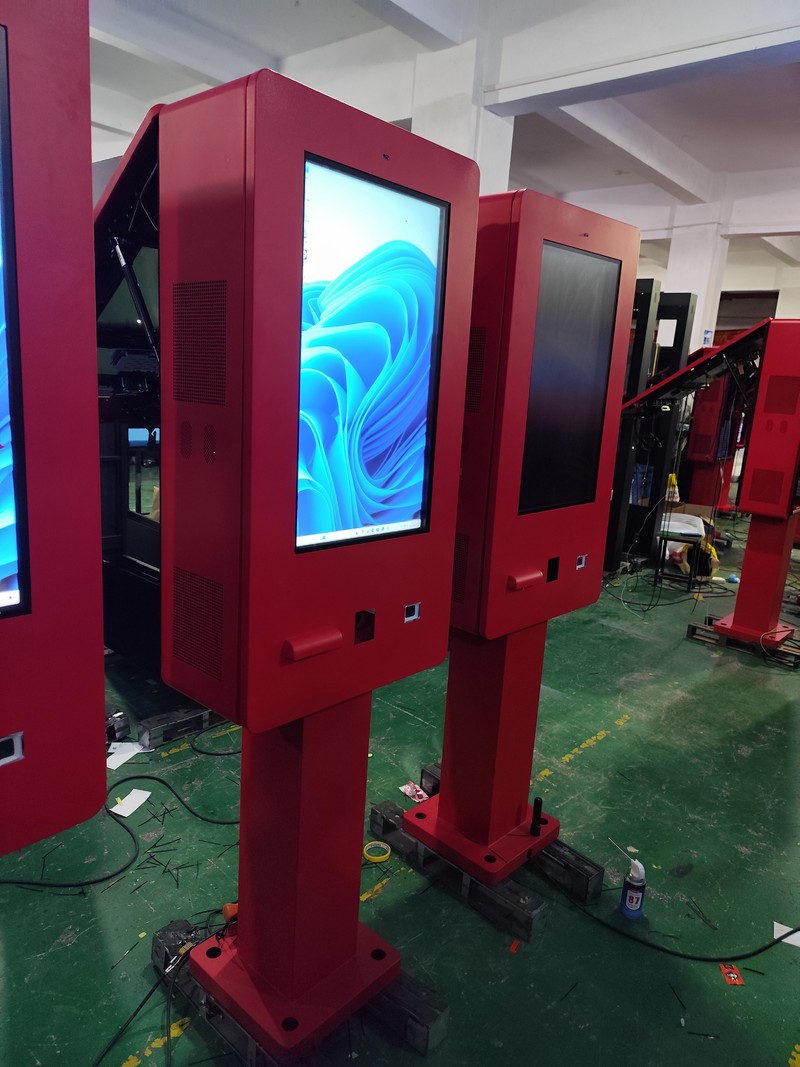
During production, both LCD faces are powered and observed. Technicians check startup, image orientation, visible-area alignment and basic playback. They also review the media player, internal power distribution, ventilation and connections included in the confirmed order.
When the screens will show different playlists, the control method must be tested accordingly. When they will mirror the same campaign, synchronisation and startup behaviour need attention. A reliable outdoor digital menu board is the result of the complete enclosure, electronics and content system working together, not simply two commercial panels placed back-to-back.
For multi-location projects, consistency affects installation as much as appearance. Mounting points, cable entry, screen orientation, player settings and accessory packing should follow the approved sample. The project team should also determine who will create content, who can publish changes and how a failed player or screen will be serviced after deployment.
ZXT LCD can review an initial unit before repeat production. This gives the buyer an opportunity to confirm cabinet proportions, user height, screen direction, external colour, logo treatment and content operation. Any adjustment is easier to make at the sample stage than after a full batch has been assembled.
To evaluate a 32-inch double-sided ordering display, provide the installation location, required quantity, viewing direction, sunlight exposure, operating schedule and preferred content update method. Explain whether both screens should show identical or independent material and list every required ordering accessory separately.
This information allows ZXT LCD to review the cabinet, LCD configuration, control system and service arrangement as one project. Buyers can also compare related outdoor LCD display solutions before selecting the final format.
The finished outdoor digital menu board should make ordering clearer without making the site harder to operate. A compact double-sided structure gives restaurants two visible communication faces, while careful content planning and project-specific construction turn that extra visibility into a practical service tool.