Phone:
+8618098949445
Physical address:
604, Building 1, Sanyu Industrial Park, Xinwei Fourth Industrial Zone, Xinzhuang Community, Majan Street, Guangming District, Shenzhen

Phone:
+8618098949445
Physical address:
604, Building 1, Sanyu Industrial Park, Xinwei Fourth Industrial Zone, Xinzhuang Community, Majan Street, Guangming District, Shenzhen

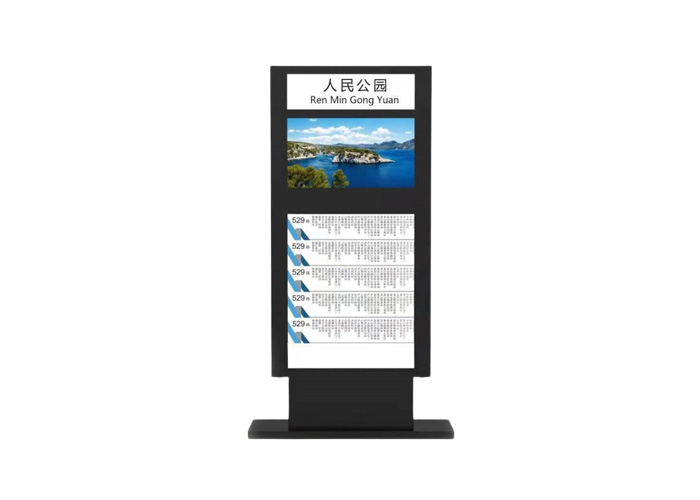
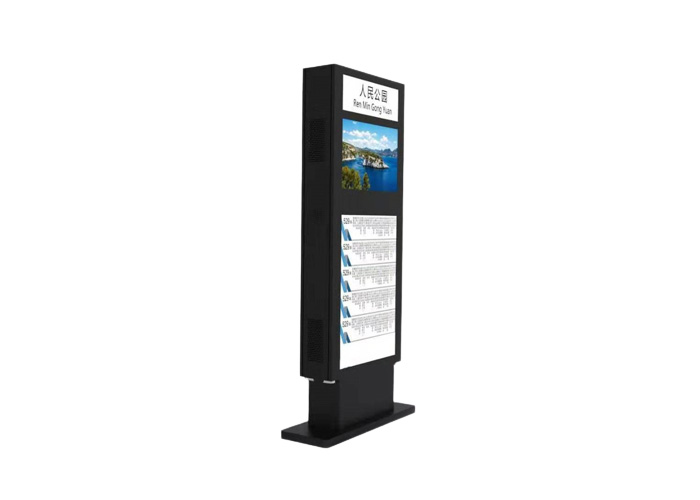
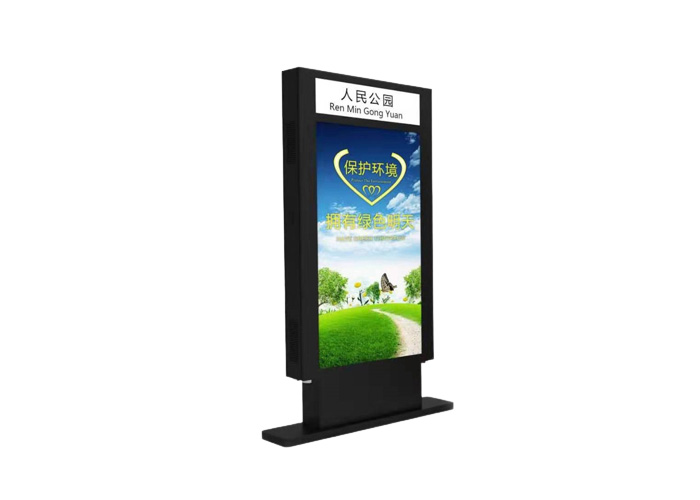
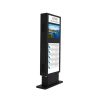
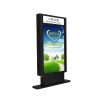
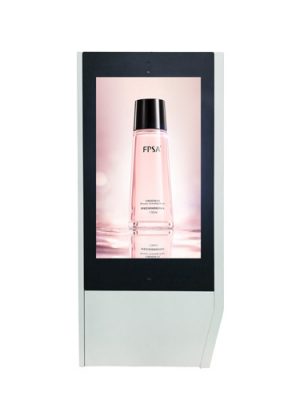
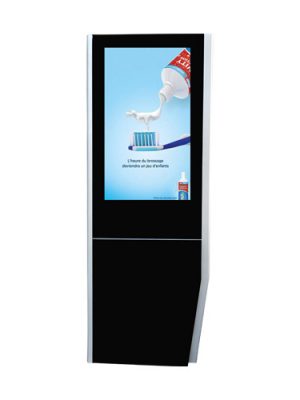
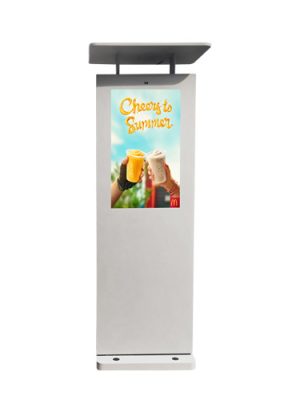
Passengers waiting for transport need information that can be understood immediately. Arrival times, route changes and service alerts take priority over decorative content. This 32-inch waterproof floor-standing display is designed as a compact information point for bus shelters, station entrances, pickup areas and other transport locations.
Its vertical freestanding structure allows the screen to be installed where wall mounting is unavailable. Unlike a general advertising totem, this model should be planned around short viewing time, changing service data and the movement of passengers through the site.
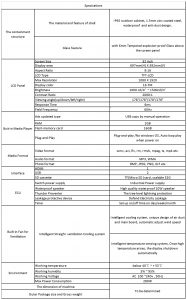
Transit content should follow a clear hierarchy. The next arrival or current service condition belongs at the top. Route maps and secondary information should remain available without competing with urgent notices.
Outdoor digital screens may also carry advertising, but commercial content should not make essential travel information difficult to find. A practical playlist can reserve fixed areas for live data while rotating local promotions in a separate section.
Applications can include:
If touch is included, passengers may search routes and local destinations. However, frequently needed information should remain visible without requiring interaction.
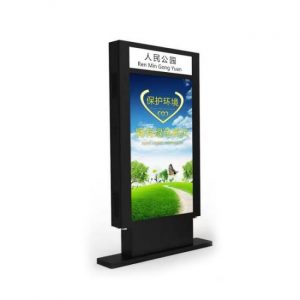
The display should be placed where passengers naturally look without obstructing the boarding area. Mounting too close to the curb may expose it to vehicle movement and road spray, while installing it behind seating can make the screen difficult to approach.
Viewing height should reflect both standing and seated passengers. The installation team also needs to consider sunlight direction, shelter reflections and sightlines from the pedestrian approach.
Although 32 inches is compact, it can be effective when text is designed for the expected distance. Route numbers should remain larger than supplementary details, and scrolling text should be used cautiously because passengers may only look at the screen briefly.
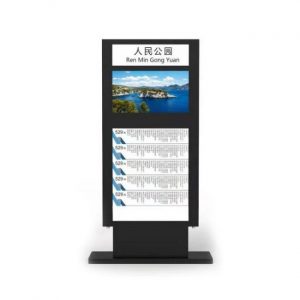
A waterproof enclosure helps protect the internal equipment from rain and dust, but the complete installation must also address the base, cable entry and ground connection. Water should not be allowed to collect around the foundation or enter through an untreated conduit.
Outdoor digital screens at transit locations may operate for long hours and receive additional heat from direct sun. Internal temperature management should therefore be matched to the local climate and daily operating schedule.
Maintenance crews need access to the display without removing surrounding street furniture. The door opening direction, internal component layout and replacement route should be reviewed before the concrete base or electrical conduit is finalized.
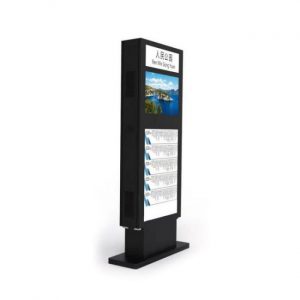
Real-time transport data requires more than a standard video playlist. The project team must confirm the data source, software platform, communication method and response when the network is unavailable.
Depending on the location, connectivity may use Ethernet, Wi-Fi or mobile data. A fallback screen should be prepared so the display can show useful static information if the live feed is interrupted.
Advertising and general announcements can be managed through the same content platform, provided operational permissions are clearly separated. Transport staff may need immediate control of service alerts, while advertising schedules may be managed by another team.
This 32-inch floor-standing unit gives transport operators a focused alternative to oversized kiosks. When installed with clear information priorities, reliable connectivity and practical service access, outdoor digital screens can make waiting areas easier to understand while creating a controlled space for local communication.
Tell us your required screen size, quantity and application. Our team will reply within 24 hours.